


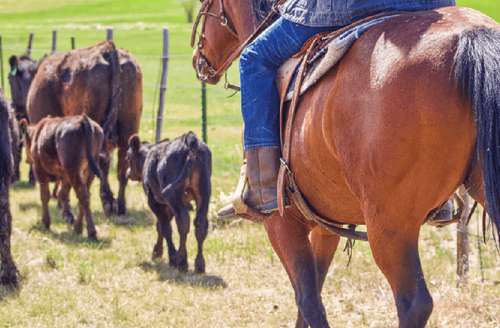
The Texas cowboy boot did not begin as a fashion statement. It began as working gear. Every curve, seam, heel, and stitch served a purpose for men who spent long days on horseback, crossed rough land, pushed cattle through dust and storms, and needed footwear that could survive the job.
The cattle drives of the late 1800s played a major role in shaping the boot we now recognize as the classic Texas cowboy boot. These drives stretched from Texas ranches to rail towns in Kansas, Missouri, and beyond. Cowboys rode for weeks or months at a time, guiding massive herds across rivers, plains, brush country, and open range.
That kind of work demanded more than ordinary shoes. A cowboy needed boots that could slide into stirrups, protect his legs, grip the ground when needed, and come off quickly in an emergency. Over time, the Texas cowboy boot became a practical answer to the demands of cattle work.
Today, cowboy boots carry a strong sense of identity. They show up at rodeos, dance halls, ranches, weddings, and everyday life across Texas. But their roots remain tied to the cattle drive era, when function came first and style followed close behind.
The World Of The Texas Cattle Drive
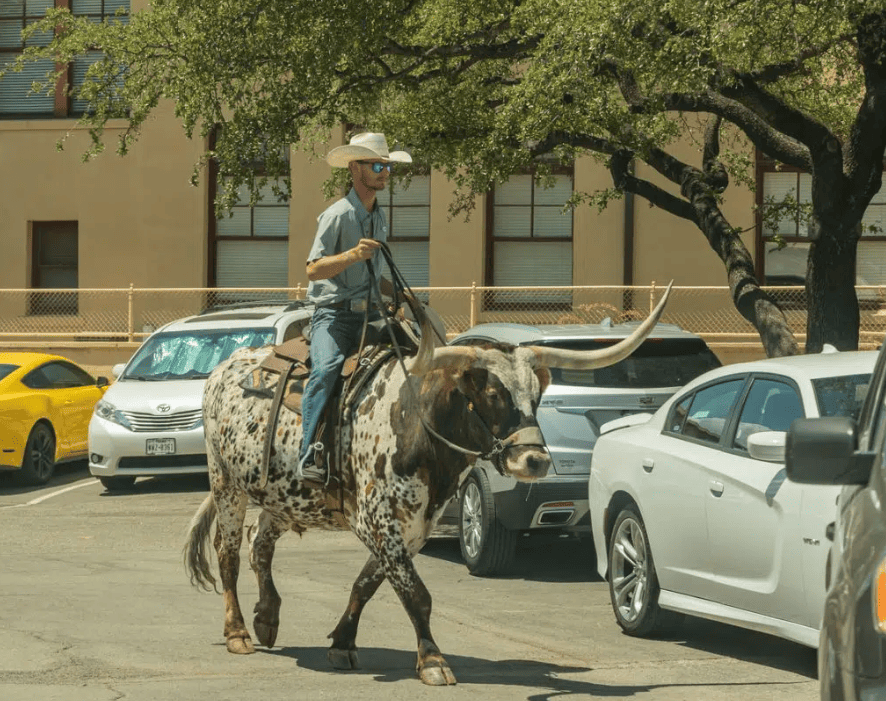
After the Civil War, Texas had millions of longhorn cattle roaming across its open lands. Many had multiplied during the war years with little management. In Texas, cattle were often worth only a few dollars a head. In northern markets, they could bring much higher prices.
That price difference created opportunity. Ranchers needed a way to move cattle from Texas to railheads farther north, where the animals could be shipped to eastern cities. Before railroads reached deep into Texas, the only practical method was to drive the herds overland.
This gave rise to famous cattle trails such as the Chisholm Trail, the Goodnight-Loving Trail, and the Western Trail. Cowboys guided herds across hundreds of miles, often moving at the pace of the cattle. A drive might cover ten to fifteen miles a day, depending on weather, water, grass, and terrain.
The work was hard, repetitive, and dangerous. Cowboys dealt with stampedes, swollen rivers, heat, insects, dust, and long hours in the saddle. They also needed to stay alert at night, when a sudden sound could panic thousands of cattle.
The cattle drive shaped nearly every part of cowboy life. It influenced the saddle, hat, rope, clothing, and especially the boot. Regular farm boots or military shoes were not enough for this kind of riding. Cowboys needed footwear built for a specific way of working.
Why Regular Boots Were Not Enough
Before the cowboy boot developed its familiar form, many riders wore whatever sturdy footwear they could get. Some used military-style boots. Others wore work boots, riding boots, or handmade footwear adapted by local craftsmen.
These boots helped, but they often fell short on long cattle drives. A cowboy spent much of the day mounted, so his boot needed to work well with the stirrup. At the same time, he might have to dismount quickly, walk over rocks, chase cattle through brush, or handle chores around camp.
A plain work boot could be too bulky for riding. A soft shoe offered little protection. A low boot left the lower leg exposed to thorns, mud, snakes, rope burns, and brush. A flat heel could slip through a stirrup, creating a serious risk if a rider fell.
On a cattle drive, small design problems could turn into major hazards. A boot that rubbed the ankle could become painful after days in the saddle. A sole that failed in wet conditions could leave a cowboy struggling miles from the nearest town. A poor fit could affect balance, comfort, and safety.
Texas bootmakers and working cowboys gradually adjusted the design. They borrowed ideas from earlier riding boots, Spanish vaquero gear, military footwear, and practical frontier experience. The result became a boot built for cattle work.
The High Shaft Protected The Cowboy’s Legs
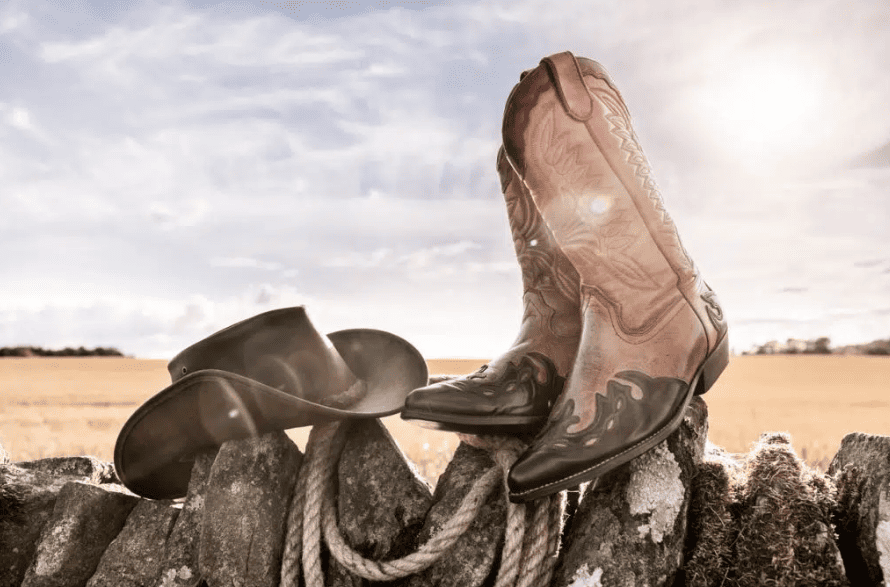
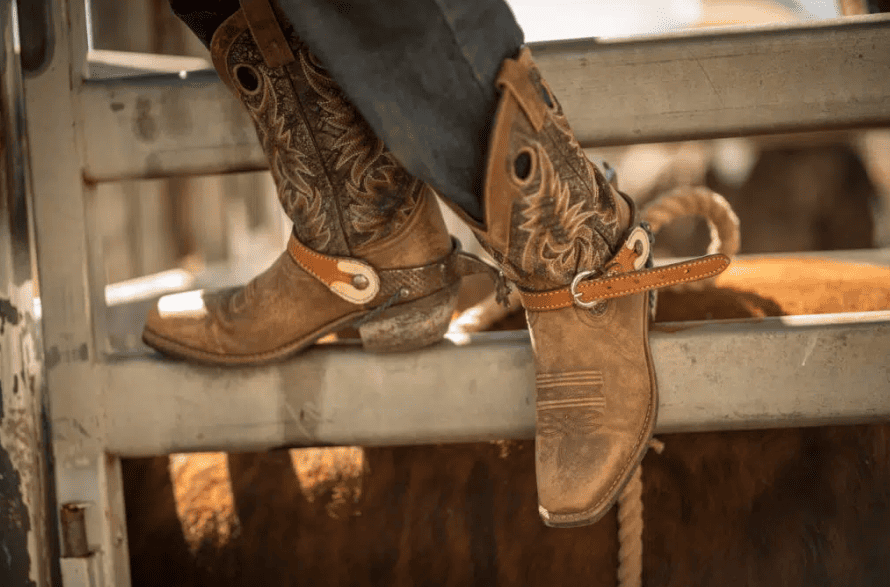
One of the most recognizable features of the cowboy boot is its tall shaft. This upper portion rises well above the ankle and often reaches mid-calf. During cattle drives, that height had a clear purpose.
Cowboys rode through mesquite, cactus, tall grass, scrub brush, mud, and riverbanks. A higher boot protected the lower leg from scratches, thorns, and bites. It also helped shield the rider from rubbing against saddle leather and stirrup straps.
The tall shaft also mattered when working around cattle. A cowboy might have to move quickly through dust, manure, wet ground, or tangled vegetation. The boot helped keep debris away from the leg and offered a layer of protection during rough handling.
Unlike lace-up boots, cowboy boots had no exposed laces to catch on brush, stirrups, or gear. That mattered on horseback. Anything that snagged at the wrong moment could throw off a rider’s balance or trap his foot.
The smooth, tall shaft became one of the boot’s most practical features. Later, it also became a place for decoration. Stitching, patterns, colored leather, and custom designs turned the shaft into a statement. But during the cattle drive era, protection came first.
The Pointed Toe Helped With The Stirrup
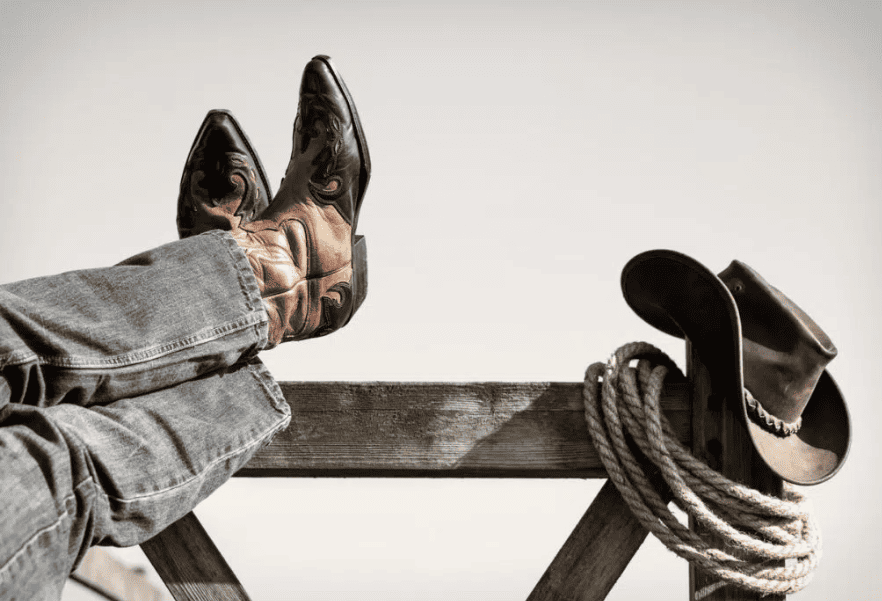
The pointed or narrow toe of the cowboy boot is often seen as a style choice today. On the trail, it had a riding purpose. A narrower toe helped the cowboy slide his foot into the stirrup more easily.
A cattle drive was not a calm pleasure ride. Cowboys mounted and dismounted often. They worked in low light, bad weather, and stressful moments. A boot that found the stirrup quickly helped the rider stay efficient and safe.
The toe shape also worked with the saddle equipment of the time. Stirrups were often made from wood, leather, or metal, and designs could vary. A wide, square work shoe might catch or sit awkwardly. A narrower toe slipped in with less effort.
The earliest cowboy boots were not always sharply pointed in the modern sense. Many had rounded or slightly tapered toes. Over time, regional preferences and fashion pushed some boots toward more dramatic shapes. Still, the practical origin remains tied to horseback work.
The toe needed balance. It had to be narrow enough for the stirrup, but strong enough for trail life. Cowboys needed boots that could handle dirt, rocks, water crossings, and camp chores. A bootmaker had to think about both riding and walking.
The Angled Heel Helped Keep The Foot In Place
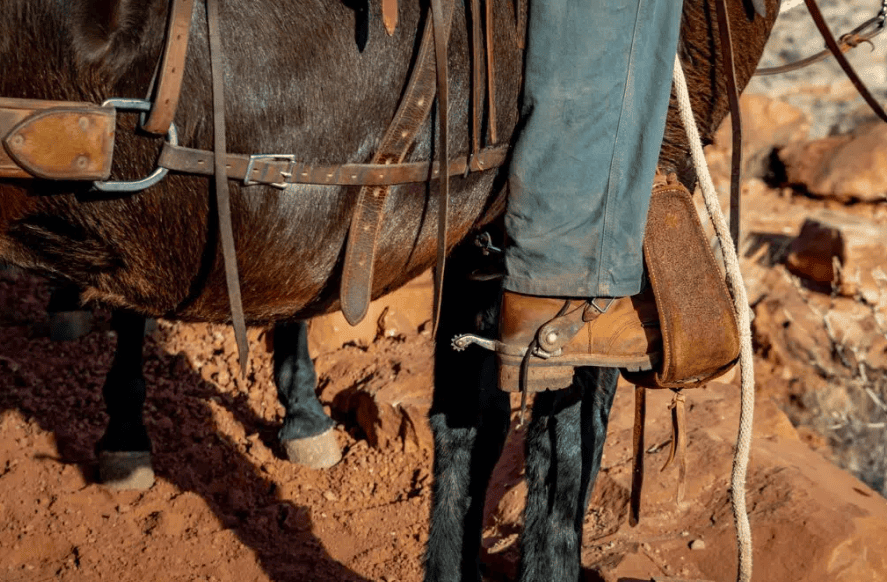
The cowboy boot heel is another feature shaped by the cattle drive. Unlike flat work boots, cowboy boots usually have a raised heel. This heel helped keep the rider’s foot from sliding too far through the stirrup.
That detail could save a life. If a cowboy fell from his horse and his foot slipped through the stirrup, he could be dragged. On a drive, with horses, cattle, and uneven land all around, that danger was real.
The heel created a stop. It helped the foot rest securely in the stirrup without sliding forward. The angled shape also supported the rider’s posture in the saddle.
The height of the heel varied. Some working cowboys preferred a lower, broader heel for better walking and general ranch work. Others used a taller riding heel. The exact style depended on the cowboy, the region, and the maker.
During cattle drives, the heel needed to serve the rider without making life on foot too difficult. Cowboys still had to set up camp, gather firewood, handle cattle, and walk when needed. The best boots found a practical middle ground.
Tough Leather Was Essential On The Trail
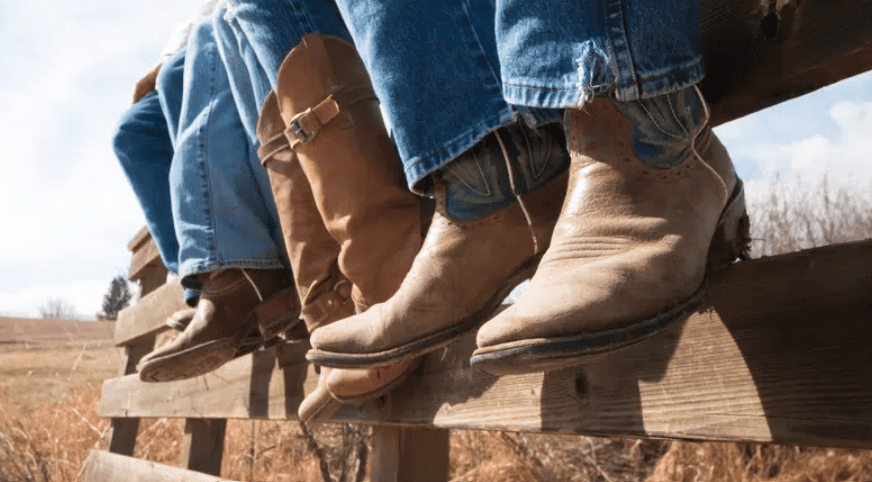
The cattle drive demanded durability. Cowboys needed boots made from tough leather that could stand up to miles of riding and rough conditions.
Leather was the natural choice. It could be shaped, repaired, oiled, and stitched. It offered protection while still allowing the boot to mold to the wearer’s foot over time. Good leather became more comfortable with use, which mattered when a cowboy wore the same boots day after day.
Cowhide was common, practical, and widely available. Some boots used other leathers depending on cost, access, and preference. The important point was strength. A weak boot could fail at the worst time.
Trail conditions were not gentle. Boots faced dust, rain, mud, river water, heat, and constant friction. Leather soles wore down. Stitching pulled. Heels loosened. A cowboy often had limited chances for repair during a drive, so good construction mattered.
Bootmakers learned what held up and what did not. They reinforced seams, shaped soles carefully, and paid attention to fit. The cattle drive became a testing ground for footwear. A boot that survived the trail earned trust.
Pull-On Design Made Sense For Cowboys
The pull-on design of the cowboy boot was another practical choice. Instead of laces, cowboy boots used a smooth shaft and pull straps or holes at the top. This made them easier to put on and reduced the risk of snagging.
Laces might seem useful for fit, but they could be a problem around horses, ropes, brush, and stirrups. A broken lace could leave a boot loose. A caught lace could create danger. A smooth boot had fewer parts that could fail.
Pull-on boots also came off more easily in an emergency. If a rider fell or got tangled, removing the boot quickly could matter. The lack of laces also helped shed mud and debris more easily.
The design was simple, reliable, and suited to life on horseback. Cowboys valued gear that worked without fuss. A boot with fewer weak points fit that mindset.
Over time, pull straps became decorative as well as useful. The stitching near the top of the shaft also became more elaborate. What began as practical detail later helped define the boot’s visual character.
The Boot Had To Work With The Saddle
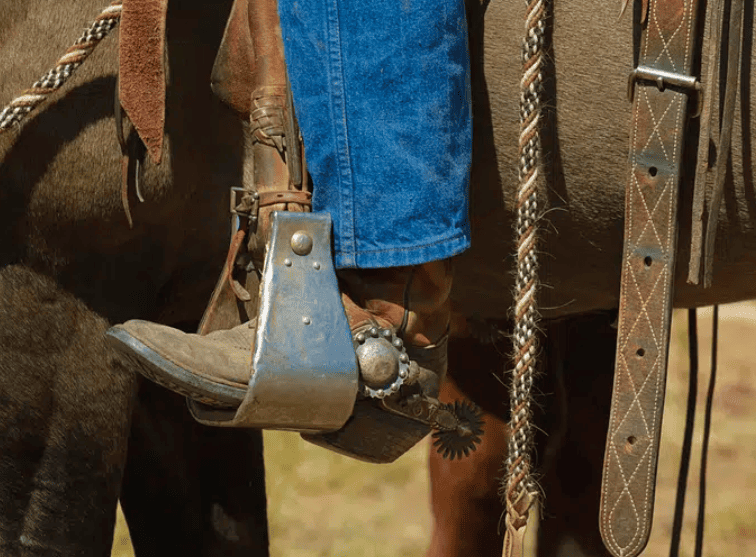
A cowboy boot cannot be understood apart from the saddle. The two worked together. The saddle kept the rider secure during long hours, while the boot helped the rider control foot placement and movement.
On cattle drives, cowboys relied on their seat, legs, reins, and horse sense. Their feet rested in stirrups for balance and control. A proper boot gave the rider confidence in that position.
The heel, toe, sole, and shaft all connected to saddle use. The sole needed enough stiffness to support the foot in the stirrup. The heel helped prevent slipping. The narrow toe helped the foot enter smoothly. The shaft protected against rubbing and rough contact.
This is why cowboy boots look different from many other kinds of work boots. They were not designed mainly for walking behind a plow or standing on a factory floor. They were built for mounted labor across open country.
The cattle drive made that need clear. Cowboys were not occasional riders. Riding was the center of their workday. Their boots had to match that reality.
Mexican Vaquero Influence Shaped Texas Gear
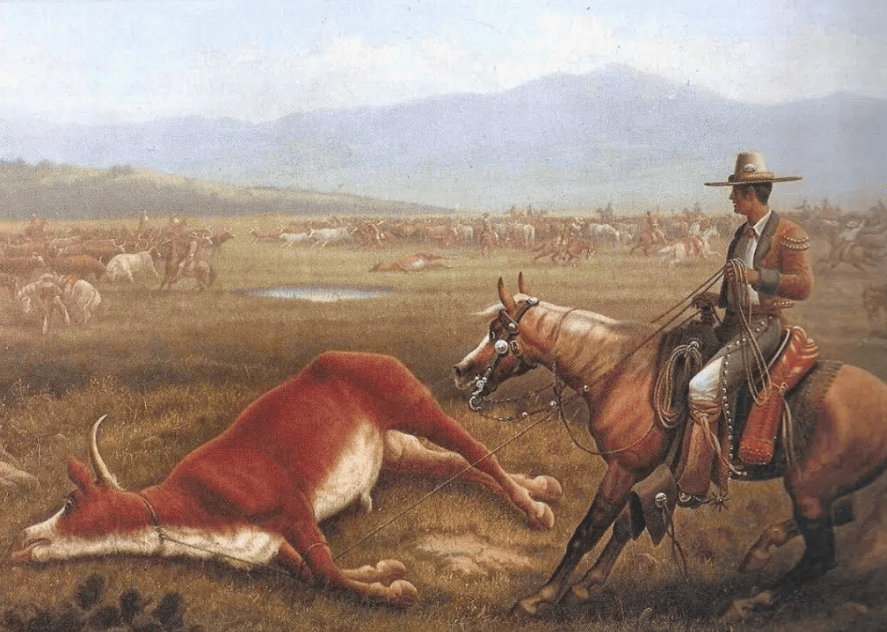
The Texas cowboy did not appear out of nowhere. Long before the great cattle drives, Mexican vaqueros had developed advanced cattle-handling traditions across the Southwest, Texas, and northern Mexico.
Vaqueros influenced riding techniques, roping methods, saddles, clothing, and footwear. Many parts of cowboy culture grew from Spanish and Mexican roots. The word “buckaroo” itself is often linked to “vaquero.”
Vaquero boots and riding gear helped shape what later became the Texas cowboy boot. High shafts, riding heels, and practical leather construction all fit into a broader horse culture that existed before the famous trail drives.
Texas cowboys adapted those traditions to their own conditions. The open range, long trails, and growing cattle economy pushed boot design in specific directions. The result was not copied from one source alone. It grew from use, repair, experimentation, and regional experience.
This mixture gave the Texas cowboy boot its character. It carried practical riding features with frontier craftsmanship and local style.
Cattle Drives Helped Spread The Boot Beyond Texas
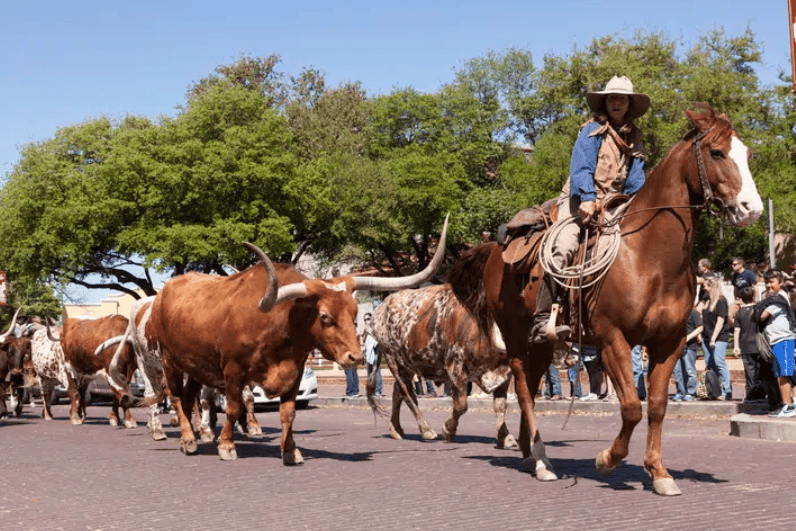
The cattle drives did not only shape the boot. They helped spread it.
Cowboys traveled from Texas into rail towns and cattle markets. Along the way, they brought their clothing, gear, speech, habits, and image. The Texas cowboy became a recognizable figure across the American West.
In trail towns, cowboys bought supplies, repaired gear, and spent their pay. Bootmakers saw what riders needed and what styles caught attention. As cattle towns grew, demand for cowboy gear increased.
The boot became linked with the working cowboy’s identity. It was practical on the trail, but it also carried meaning. A pair of boots showed that a man belonged to the world of horses, cattle, and open range labor.
As railroads expanded and cattle drives changed, the cowboy boot remained. Ranching continued. Rodeo culture grew. Western shows, films, music, and later television helped turn the boot into an American icon.
Still, the boot’s fame rested on a real foundation. The cattle drive gave it purpose before it gained symbolism.
Style Grew From Function
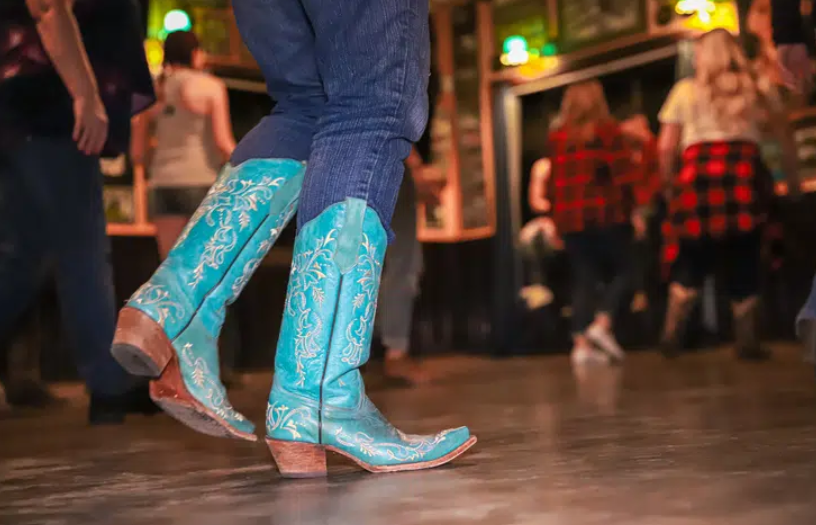
Modern cowboy boots can be plain, fancy, rugged, or highly decorative. Some are made for ranch work. Others are made for dancing, fashion, collecting, or formal wear. This variety can make it easy to forget that the classic design began with practical needs.
Decorative stitching originally helped stiffen and reinforce the leather shaft. Fancy patterns later became a way to show craftsmanship and taste. Taller shafts protected the leg before they became a canvas for style. Heels helped with stirrups before they became part of the boot’s recognizable profile.
Even bright colors and custom designs have roots in cowboy pride. A cowboy’s gear was personal. His saddle, hat, spurs, and boots reflected his work and identity. A well-made pair of boots showed care, skill, and experience.
Cattle drives brought together cowboys from different backgrounds. Their gear changed as they learned from one another and from the demands of the trail. Practical solutions became traditions. Traditions became style.
That is why the Texas cowboy boot feels both useful and expressive. It came from hard work, but it also carries personality.
The End Of The Long Drives Did Not End The Boot
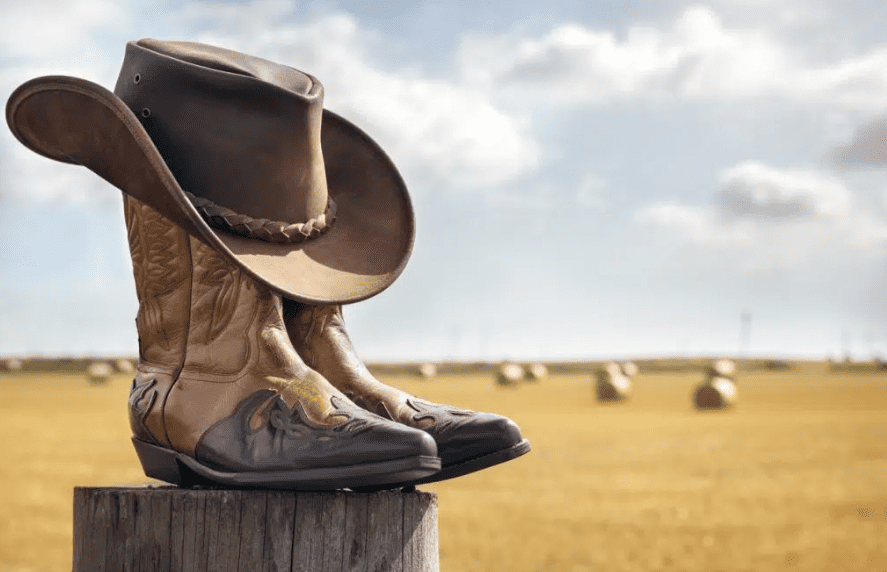
By the late 1800s and early 1900s, the great era of long cattle drives began to fade. Railroads reached farther into Texas. Barbed wire closed off open ranges. Ranching became more organized and less dependent on massive overland drives.
The cowboy boot, however, did not disappear. It remained useful for ranch work and horseback riding. It also became a symbol of Texas culture.
Rodeos helped keep cowboy skills in public view. Ranch families continued to wear boots for daily work. Bootmakers refined their craft and built regional reputations. Towns known for bootmaking became part of the story.
As the boot moved into town life, it changed again. Some designs became dressier. Exotic leathers grew popular. Custom makers developed detailed stitching and personalized fits. Mass production made boots more widely available.
Yet the core shape remained tied to the cattle drive era. The high shaft, raised heel, pull-on design, and riding-friendly toe all point back to the needs of cowboys moving cattle across long distances.
Why The Texas Cowboy Boot Still Matters
The Texas cowboy boot matters because it tells a practical story. It shows how clothing changes when people face specific work, land, weather, and danger.
The cattle drives demanded gear that could handle pressure. Cowboys needed boots that protected them, helped them ride, and lasted through long days. Bootmakers responded with designs that solved real problems.
That history gives the boot lasting meaning. When someone wears cowboy boots today, they may be dressing for work, tradition, comfort, or style. In Texas, the boot often carries a sense of place. It connects ranch life, trail history, music, rodeo, and everyday pride.
The boot also reminds us that iconic objects often begin with ordinary needs. A raised heel, tall shaft, and narrow toe might look stylish now, but each feature grew from a job that had to be done well.
The Texas cowboy boot was shaped by dust, cattle, leather, horses, and miles of trail. It became famous because it worked.
Conclusion
The cattle drives helped shape the Texas cowboy boot by turning it into a piece of serious working equipment. Cowboys needed footwear that could handle long hours in the saddle, protect their legs, fit safely in stirrups, and survive rough country.
Every major feature of the classic boot served those needs. The high shaft guarded the lower leg. The narrow toe helped the foot find the stirrup. The raised heel added safety and control. The pull-on design reduced snagging. Tough leather gave the boot strength and endurance.
As cattle drives spread cowboy culture beyond Texas, the boot gained recognition. Later generations added style, decoration, and fashion, but the foundation stayed the same.
The Texas cowboy boot was born from work. The cattle drives gave it shape, purpose, and reputation. That is why it remains one of the clearest symbols of Texas history, ranching tradition, and the enduring image of the American cowboy.

Comments (0)
No comments yet. Be the first to share your thoughts.
Leave a comment