


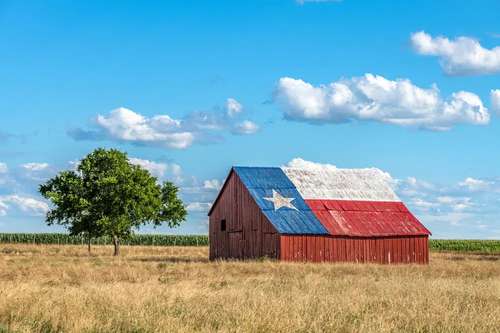
Texas has changed dramatically over the past two centuries. What was once a sparsely populated frontier is now home to more than 31 million people, some of the nation's largest cities, and one of the world's biggest economies. Yet despite all that growth, many of the laws and legal principles that shaped early Texas continue to influence how people buy homes, run businesses, attend public schools, and even manage land today.
Some of these laws date back to the days of the Republic of Texas, while others were inherited from Spanish and Mexican rule before Texas became part of the United States. Although they've been amended and refined over the years, their influence remains surprisingly visible in modern Texas. Looking at these older laws offers an interesting reminder that history isn't confined to museums—it continues to shape everyday life across the Lone Star State.
The Texas Constitution Still Guides Everyday Government
One of the oldest legal documents still affecting Texans is the Texas Constitution of 1876. While many states have replaced their constitutions several times, Texas continues to operate under the same basic document adopted nearly 150 years ago.
Unlike the U.S. Constitution, which focuses on broad governmental principles, the Texas Constitution includes detailed provisions covering subjects such as taxation, education, transportation, local government, and public finance. Because of that level of detail, Texans regularly vote on constitutional amendments that directly affect how state and local government operates.
That means a document written during the nineteenth century continues to influence decisions made in the twenty-first. Whether voters approve funding measures, changes to property taxes, or updates affecting state agencies, many of those changes begin with constitutional amendments rooted in the framework established in 1876.
Homestead Protections Continue to Protect Homeowners
One of Texas' oldest legal traditions remains one of its most practical.
Texas homestead protections began during the Republic of Texas and were later strengthened through constitutional provisions designed to help families avoid losing their primary residence during periods of financial hardship. While these protections have always included important exceptions—such as mortgages, property taxes, and certain other legal obligations—they remain among the strongest homestead protections in the United States.
Those nineteenth-century laws still influence modern real estate transactions, estate planning, and bankruptcy proceedings. Many homeowners don't realize they're benefiting from legal protections created generations ago, yet those rules continue to provide security for families across the state.
Land Ownership Works Differently in Texas
Texas has always placed tremendous importance on private property, and that legal tradition continues today.
More than 95 percent of Texas land is privately owned, making it one of the most privately owned states in the country. That distinguishes Texas from many western states, where the federal government controls much larger portions of the landscape.
The legal emphasis on private ownership affects everything from ranching and farming to outdoor recreation and wildlife management. Visitors often discover that much of Texas cannot simply be crossed on foot because privately owned ranches and farms dominate large portions of the state, making public parks and wildlife management areas especially important for outdoor recreation.
Mineral Rights Still Reflect Texas' Oil History
One legal principle that surprises many newcomers involves mineral rights.
Texas law allows ownership of the land itself to be separated from ownership of the oil, natural gas, and other minerals beneath it. This practice became especially significant after the Spindletop oil discovery near Beaumont in 1901, when mineral ownership suddenly carried enormous economic value.
That legal structure still affects property sales today. Someone purchasing rural land may discover that previous owners retained the mineral rights decades earlier, meaning another individual or company could legally own the resources beneath the property.
Even after more than a century of oil production, this legal concept continues shaping real estate transactions throughout Texas.
Water Laws Still Reflect Frontier-Era Challenges
Water has always been one of Texas' most valuable natural resources, and many of today's legal principles developed when reliable water supplies could determine whether a community survived.
Texas continues to distinguish between surface water and groundwater, with each governed under different legal frameworks. Surface water found in rivers, lakes, and streams belongs to the state and is managed through permits, while groundwater generally follows the longstanding Rule of Capture, allowing landowners to pump water beneath their property, subject to regulation by local groundwater conservation districts.
Although modern technology has transformed water management, these legal concepts remain central to agriculture, municipal water systems, and long-term planning. As Texas continues adding new residents every year, laws first developed to address frontier conditions still influence some of the state's most important policy decisions.
Public Schools Still Benefit From Land Set Aside More Than a Century Ago
Many Texans are surprised to learn that public education still benefits from decisions made during the nineteenth century.
State leaders recognized early that a growing Texas needed a stable way to support public schools, so they dedicated millions of acres of public land to what became the Permanent School Fund. Revenue from grazing leases, timber production, mineral development, and investments has helped support public education for generations.
That system continues today. Although the Permanent School Fund is only one part of Texas' school finance system, it remains one of the largest educational endowments in the world and reflects a legal decision made long before oil transformed the state's economy.
County Government Still Follows an Old Frontier Model
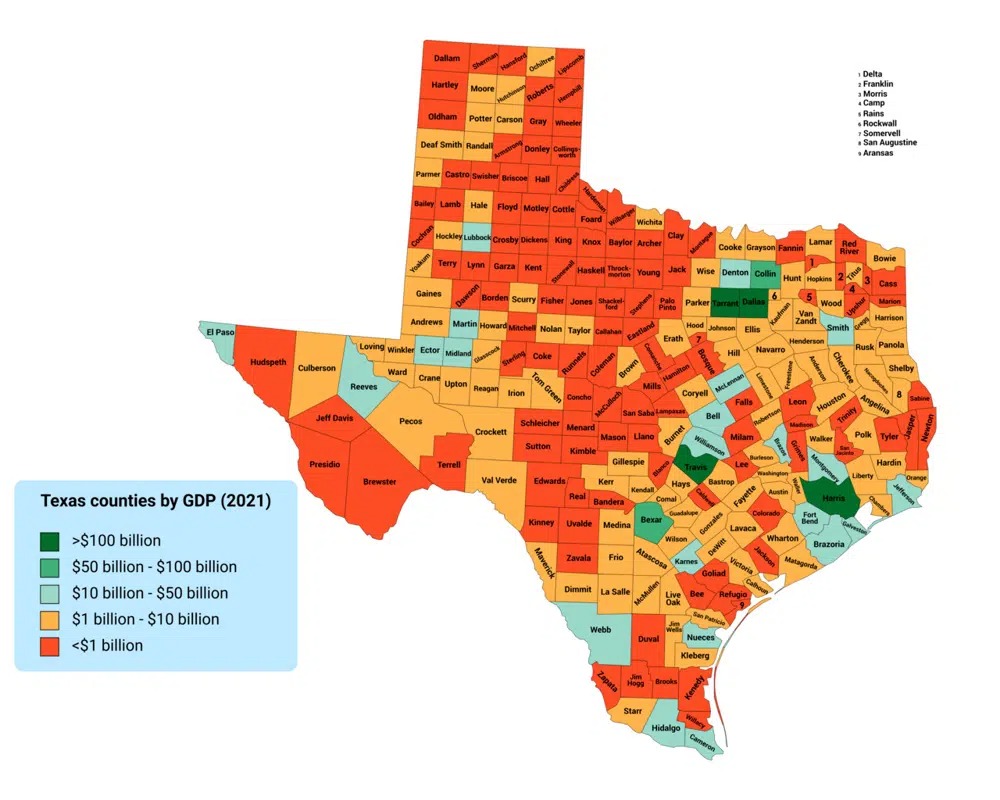
Radom1967, Texas counties by GDP 2021, CC BY-SA 4.0
Texas has 254 counties, more than any other state in America, and that number reflects decisions made during the state's frontier years.
When travel was slow and communities were widely separated, lawmakers created counties that allowed residents to reach a courthouse or government office without traveling unreasonable distances. As railroads, highways, and modern transportation developed, those county boundaries largely remained unchanged.
Today, county governments continue handling elections, maintaining public records, operating courts, supporting law enforcement, and maintaining many rural roads. Although Texas has changed enormously since the nineteenth century, the county system established during that period still serves as one of the foundations of local government.
Agricultural Laws Continue Supporting Working Ranches
Agriculture remains one of Texas' defining industries, and several longstanding legal principles continue supporting it.
For example, qualifying farms and ranches may receive special property tax valuation based on agricultural productivity rather than market value. That approach helps reduce tax burdens on working agricultural land, making it easier for ranches and farms to remain in operation even as nearby development increases surrounding property values.
Texas also protects many agricultural operations through its Right to Farm Act, which limits certain nuisance lawsuits against qualifying farms and ranches operating within the law. These protections help preserve agriculture in a state where rapid population growth continues placing pressure on rural land.
Employment Laws Still Reflect Longstanding Texas Policies
Some of the legal principles that shape today's workplaces have existed in Texas for generations.
Texas remains both an at-will employment state and a right-to-work state. In most situations, at-will employment means either an employer or employee may end the employment relationship at any time unless limited by a contract or specific legal protections, while right-to-work laws generally prevent employees from being required to join or financially support a labor union as a condition of employment.
These legal policies continue influencing hiring, business expansion, and economic development across the state.
Many companies considering relocation to Texas point to its employment laws alongside factors such as transportation, workforce availability, and the absence of a personal state income tax. Whether people support or criticize these policies, they remain part of the legal environment that has helped shape Texas' modern economy.
Branding Laws Still Protect Texas Ranching Traditions
Long before digital records and GPS technology, ranchers relied on livestock brands to identify ownership.
Texas law still recognizes the importance of registered livestock brands, with county clerks maintaining brand records that help establish ownership of cattle, horses, and other livestock. Although modern ranchers now use ear tags, microchips, and electronic recordkeeping alongside traditional brands, branding continues to serve an important legal purpose.
It's a reminder that some frontier practices never completely disappeared. What began as a practical solution for managing open-range cattle has evolved into a legal system that still supports one of Texas' largest agricultural industries.
Wildlife Laws Continue Balancing Conservation and Recreation
Texas has a long history of hunting, fishing, and wildlife management, but today's outdoor experiences are shaped by laws developed over many decades.
The Texas Parks and Wildlife Department (TPWD) establishes hunting seasons, fishing regulations, bag limits, and licensing requirements based on state law. These rules help conserve wildlife populations while allowing millions of Texans and visitors to continue enjoying outdoor recreation.
The impact is easy to see across the state.
Healthy white-tailed deer populations, restored wild turkey numbers, managed fisheries, and protected habitats all reflect legal decisions designed to balance conservation with recreation. Many outdoor traditions that Texans enjoy today exist because those laws continue protecting natural resources for future generations.
State Parks Exist Because Earlier Generations Protected the Land
Many of Texas' favorite outdoor destinations survive because lawmakers chose to preserve them before development reached them.
Parks such as Garner State Park, Palo Duro Canyon State Park, Bastrop State Park, and Longhorn Cavern State Park have been protected through legislation, land purchases, and conservation efforts carried out over many decades. Without those decisions, many of these landscapes could have been dramatically altered or lost altogether.
Those legal protections continue benefiting millions of visitors every year. Families hiking trails, swimming in rivers, camping beneath the stars, or simply enjoying scenic overlooks are experiencing places that remain accessible because previous generations created legal systems to preserve them.
Local Government Still Operates Much as It Did Generations Ago
Although Texas cities have grown dramatically, many local government structures remain surprisingly familiar.
County commissioners courts still oversee county government, elected sheriffs continue serving as the chief law enforcement officers in many counties, and county clerks maintain public records that date back decades or even centuries. These offices have evolved over time, but their basic responsibilities remain rooted in legal traditions established long ago.
Cities have changed as well, but within familiar legal frameworks.
Larger municipalities often operate as home-rule cities, exercising broader local authority granted under the Texas Constitution, while smaller communities continue functioning as general-law cities with powers specifically granted by the Legislature. These systems allow communities of very different sizes to govern themselves while remaining part of the same statewide legal structure.
Property Records Still Reflect Historic Legal Traditions
Buying property today involves technology that early Texans could never have imagined, yet much of the legal process remains rooted in older traditions.
County courthouses continue maintaining official land records, deeds, easements, and other documents that establish ownership. Modern transactions may be completed electronically, but the legal concepts behind recording property ownership have remained remarkably consistent.
In some counties, property records stretch back well over a century. Title companies, surveyors, attorneys, and buyers often rely on historical documents when researching ownership, resolving boundary questions, or confirming mineral rights. These records create a direct connection between Texas' legal past and today's real estate market.
Old Laws Continue Adapting to Modern Texas
Not every historic law has remained unchanged.
Many have been revised repeatedly to address new technologies, population growth, environmental concerns, and changing economic conditions. Courts also continue interpreting older statutes and constitutional provisions as new legal questions arise.
Even so, the underlying legal framework often remains recognizable. Rather than replacing older systems entirely, Texas has generally updated them to meet modern needs while preserving many of the principles that helped shape the state during earlier generations. That balance between tradition and adaptation is one reason Texas law continues reflecting both its history and its rapid growth.
What These Historic Laws Mean for Texans Today
It's easy to think of old laws as historical curiosities with little relevance to modern life.
In reality, many of them influence ordinary activities every day. Buying a house, sending children to public school, visiting a state park, operating a ranch, starting a business, or using groundwater all involve legal principles that trace their roots back decades—or even centuries.
Most people never notice those connections. Yet they quietly shape the systems Texans rely on every day, providing continuity between the state's frontier past and its modern economy.
Old Texas Laws That Still Matter
Some of the historic legal principles that continue influencing daily life include:
- The Texas Constitution of 1876, which still provides the framework for state and local government.
- Homestead protections, which continue helping safeguard qualifying primary residences.
- The Permanent School Fund, which still supports public education through revenue generated from state lands and investments.
- Separate mineral rights ownership, which remains an important part of Texas property law.
- The Rule of Capture and related groundwater laws that continue influencing water use.
- Agricultural valuation and Right to Farm protections, which help support working farms and ranches.
- Longstanding employment laws, including at-will employment and right-to-work policies.
- Wildlife conservation laws, which help protect hunting, fishing, and outdoor recreation opportunities.
Each of these legal traditions demonstrates how decisions made years ago continue affecting life across Texas today.
Texas' Past Is Still Part of Everyday Life
Texas is constantly growing, with new neighborhoods, businesses, highways, and technologies changing the state every year.
Yet beneath that modern growth lies a legal foundation built over generations. Many of the laws that once helped organize frontier settlements, protect family homes, encourage agriculture, and conserve natural resources continue guiding everyday decisions across the state.
Understanding these older laws offers more than a history lesson. It helps explain why Texas often approaches property, education, business, conservation, and local government differently from many other states—and why the past continues to play an important role in shaping the Texas people experience today.
Comments (0)
No comments yet. Be the first to share your thoughts.
Leave a comment