


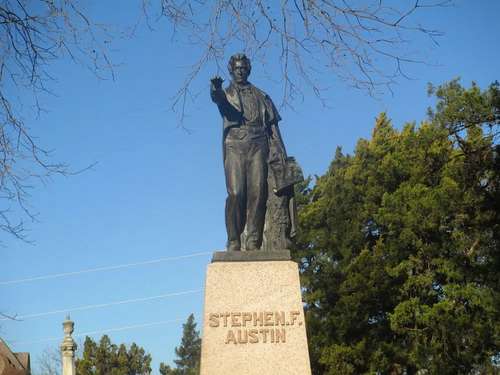
Image: No machine-readable author provided. Billy Hathorn assumed (based on copyright claims)., Stephen F. Austin, Texas State Cemetery, Austin, TX IMG 6292, CC BY-SA 3.0
When Texas declared independence in 1836, its leaders faced a problem larger than winning a revolution. They had to turn a vast, unsettled territory into a functioning country with courts, property records, criminal laws, elected offices, and rules that citizens would recognize as legitimate.
They did not start with a blank page. Early Texas law combined Spanish and Mexican civil law, American constitutional ideas, Southern legal practices, and solutions created for life on the frontier. The leaders who built that system included famous figures such as Stephen F. Austin and Sam Houston, along with lawyers, judges, legislators, and Mexican federalists whose legal work is less widely remembered.
Their decisions established principles that still influence Texas property law, family law, courts, elections, and government.
Stephen F. Austin Helped Create Order Before Texas Had a Government
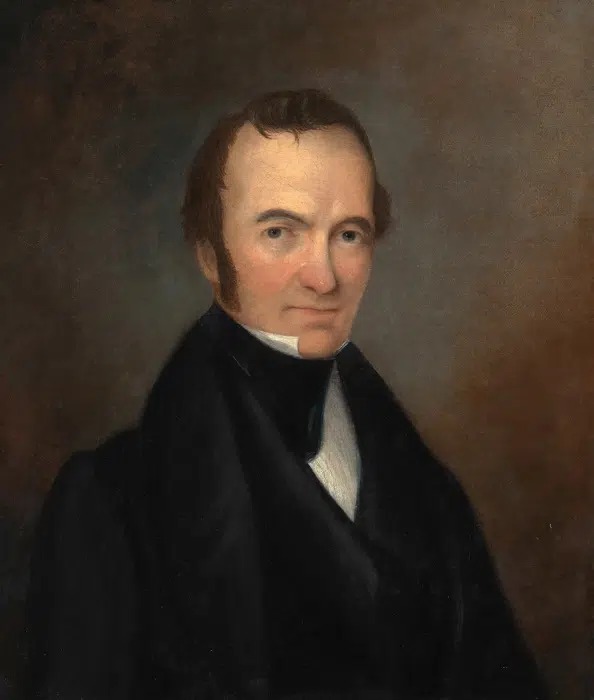
Stephen F. Austin is best known for bringing Anglo-American settlers to Mexican Texas, but his role also required him to perform many basic governmental functions. After taking over the colonization project begun by his father, Moses Austin, he supervised land distribution, communicated with Mexican authorities, and helped settle disputes within his colony.
Austin’s settlers did not live outside the law. They were subject to Mexican sovereignty and the legal system of the state of Coahuila y Tejas, which was created under the Mexican federal Constitution of 1824. Local government operated through municipalities, alcaldes, and other institutions derived from Spanish and Mexican law.
As empresario, Austin recommended local officials, maintained records, interpreted colonization requirements, and helped residents navigate an unfamiliar legal system. He also arranged for codes and instructions to be translated or explained to settlers who spoke little Spanish and had expected legal rules closer to those of the United States.
Land administration was one of his most important responsibilities. Surveyors identified tracts, land commissioners issued titles, and records had to establish who legally owned each property. Those early grants remained important after independence, and Texas courts spent decades resolving disputes involving boundaries, surveys, incomplete paperwork, and overlapping claims.
Austin was not a judge with unlimited authority, but he became an essential link between settlers and Mexican government. His work helped create the expectation that property ownership, local offices, and written records would remain central to government in Texas.
Mexican Federalism Shaped the Leaders Who Supported Independence
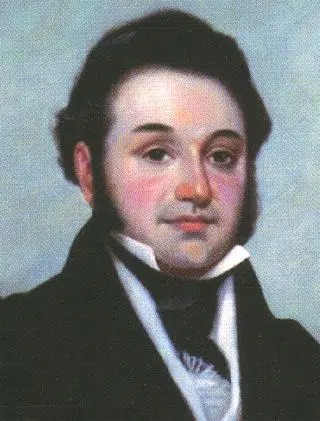
Texas independence is often described only as a break between Anglo settlers and Mexico, but several early Texas leaders had deep experience in Mexican law and politics. The most important was Lorenzo de Zavala, a Mexican statesman, lawyer, diplomat, and supporter of federalism.
Zavala had served as governor of the State of Mexico, Mexico’s treasury minister, and the country’s diplomatic representative in France. He opposed President Antonio López de Santa Anna’s move away from the federal system established in 1824 and eventually joined the Texas revolutionary cause.
At the Convention of 1836, Zavala brought knowledge of republican government and Mexican legal traditions that many recently arrived delegates lacked. He served on the committee that drafted the Constitution of the Republic of Texas and was elected interim vice president.
His involvement helped give the new government credibility beyond the Anglo-American colonies. It also reflected the fact that opposition to Santa Anna included Mexican federalists who believed the central government had violated the constitutional order of 1824.
Zavala’s influence did not erase the divisions within the new republic. The constitution created by the convention denied full citizenship to several groups and protected slavery, a system Mexico had increasingly restricted. Even so, Zavala represented an important connection between the legal traditions of Mexican Texas and the institutions of the republic.
George Childress Framed the Legal Case for Independence
The Convention of 1836 opened at Washington-on-the-Brazos on March 1 while the Texas Revolution was still underway. Delegates quickly appointed a five-man committee to prepare a declaration explaining why Texas was separating from Mexico.
The committee was chaired by George C. Childress, a Tennessee-trained lawyer who had arrived in Texas only a few months earlier. The other members were James Gaines, Edward Conrad, Collin McKinney, and Bailey Hardeman.
Childress is generally credited with writing most of the Texas Declaration of Independence. The committee presented the document within approximately 24 hours, suggesting that he had prepared much of the language before the convention assembled.
Adopted on March 2, the declaration followed the structure of the American Declaration of Independence. It argued that legitimate government depended on the protection of life, liberty, and property and accused the Mexican government of abandoning the federal Constitution of 1824, suppressing representative government, and using military force against the people of Texas.
The document was both a political announcement and a legal argument. It attempted to show foreign governments and potential supporters that independence was a response to broken constitutional obligations rather than a revolt without cause.
Its claims were selective. The declaration criticized Mexican policies affecting immigration and religion but did not acknowledge how slavery and the desire to protect it influenced many Texas settlers. That contradiction carried directly into the constitution written by the same convention.
Richard Ellis Kept the Convention Moving
The delegates selected Virginia-born lawyer Richard Ellis as president of the Convention of 1836. His role was less celebrated than that of Childress, Houston, or Zavala, but it was essential because the convention had to create a government while Mexican forces were advancing.
Ellis presided over debate, assigned committees, and helped move the delegates rapidly from independence to constitution-making. The group completed its principal work in approximately two weeks, an unusually short period for establishing an entirely new national government.
Speed mattered because Texas needed officials who could claim legal authority immediately. The convention therefore did more than draft documents: it created an interim government led by President David G. Burnet and Vice President Lorenzo de Zavala.
The delegates’ legal work occurred during a military emergency. News from the Alamo and reports of Mexican troop movements created pressure to finish before the convention itself was forced to flee.
The 1836 Constitution Created the Republic’s Government
The Constitution of the Republic of Texas borrowed heavily from the U.S. Constitution and the constitutions of American states. It established a president, a bicameral Congress, and a judiciary composed of a Supreme Court and lower courts.
The document included a declaration of rights protecting freedom of speech and religion, trial by jury, due process, the right to bear arms, and protection against unreasonable searches. It also prohibited imprisonment for debt in most circumstances and rejected hereditary privileges.
The system was not identical to the federal government of the United States. Texas was a unitary republic rather than a federation of states, and its president faced strict term restrictions. The first elected president served a two-year term, while later presidents served three years and could not immediately succeed themselves.
The constitution also built racial inequality into the republic. It protected slavery, restricted Congress’s authority to free enslaved people, and denied full citizenship to people of African and Native ancestry. Free Black residents generally needed congressional permission to remain in the republic.
These provisions show that the legal foundation of Texas contained both recognizable civil liberties and explicit exclusions. Early leaders created representative institutions for some residents while using those same institutions to deny freedom and political membership to others.
David G. Burnet Turned the Constitution Into an Interim Government
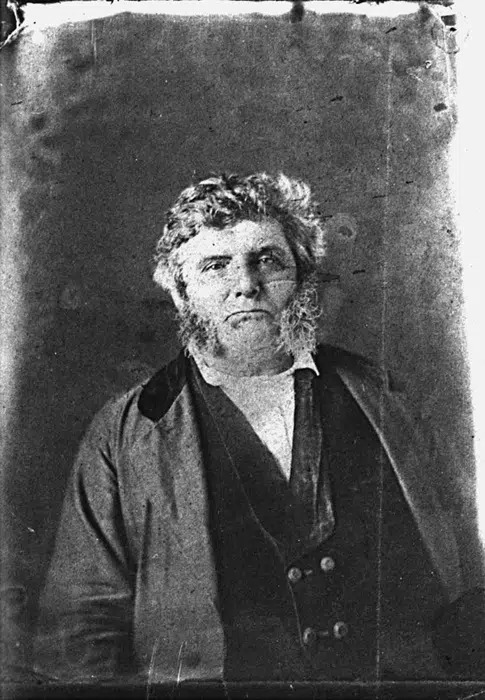
The convention selected David G. Burnet as interim president because the republic could not wait for a regular election. His government had to operate while officials and civilians were retreating eastward during the Runaway Scrape.
Burnet’s administration organized executive departments, handled military and diplomatic matters, and attempted to maintain civilian authority during the war. After the victory at San Jacinto, his government also dealt with captured Mexican president Santa Anna.
Burnet and Santa Anna signed the public and secret Treaties of Velasco in May 1836. The public agreement called for the end of hostilities and the withdrawal of Mexican troops, while the secret agreement included a promise that Santa Anna would work for Mexican recognition of Texas independence.
Mexico later rejected the treaties, arguing that Santa Anna lacked authority while held as a prisoner. Although the agreements did not produce formal recognition, they demonstrated the new government’s effort to use written legal instruments—not only battlefield victory—to secure the republic’s position.
Sam Houston Gave the New Government Political Stability
Texans elected Sam Houston as the republic’s first constitutional president in September 1836. Houston inherited a government burdened by debt, military threats, disputed land claims, a weak currency, and limited recognition abroad.
His administration generally favored restraint. Houston sought diplomatic recognition, attempted to reduce military spending, and supported eventual annexation by the United States. He also tried to keep the civilian government from being dominated by army officers and volunteers who wanted renewed campaigns against Mexico.
The first Congress met at Columbia in October 1836 with 14 senators and 29 representatives. It organized executive departments, established courts, addressed revenue and land policy, and began converting the broad framework of the constitution into operating law.
Houston also had to make early judicial appointments. The Supreme Court initially consisted of a chief justice and district judges who served as associate justices, a structure partly chosen because the republic lacked the money and lawyers needed for a large independent court system.
The First Congress Built the Machinery of the Republic
The First Congress of the Republic of Texas faced practical questions that the constitution could not answer in detail. It had to define the responsibilities of cabinet departments, organize counties and courts, establish postal routes, issue revenue measures, regulate land claims, and determine how government records would be kept.
Lawmakers also created the foundation of the republic’s judicial districts. District judges traveled across large territories, hearing criminal and civil cases in communities where courthouses, jails, trained clerks, and law books were often scarce.
Public lands occupied much of Congress’s attention. Texas used land to reward military service, attract settlers, finance government, and encourage infrastructure, but inconsistent grants and speculative claims created lasting confusion.
The legislative system itself followed an American model. The House had members elected for short terms, while senators represented districts for longer periods, creating different levels of responsiveness and continuity within the same Congress.
Congress Adopted English Common Law in 1840
Texas inherited Spanish and Mexican civil law, but most Anglo-American lawyers arriving in the republic had been trained in English-derived common law. The clash created uncertainty over contracts, court procedures, property, and legal precedent.
In 1840, the Republic of Texas adopted the common law of England as the general rule for decision when it did not conflict with the constitution or statutes. The change aligned courtroom practice more closely with the training of most Texas lawyers and with the legal systems of the United States.
Texas did not abandon its earlier civil-law inheritance. Spanish and Mexican principles continued to influence land titles, marital property, inheritance, water rights, and homestead protections.
Modern Texas law is therefore not simply an imported version of English common law. It is a hybrid system formed by the legal regimes that governed the territory before independence and the choices made by republic-era lawmakers.
Lawmakers Protected Homesteads and Married Women’s Property
The Republic Congress created two property protections that became lasting parts of Texas law. In 1839, lawmakers protected a qualifying family homestead and certain essential possessions from seizure by most creditors.
The original exemption generally covered up to 50 rural acres or an urban residence valued at no more than $500. The policy was intended to keep debt from leaving families without shelter, livestock, tools, or the ability to support themselves.
In 1840, Congress also recognized property owned by a woman before marriage, along with property she later received through gift or inheritance, as her separate property. The law protected those assets from many debts created by her husband.
These rules drew partly from Spanish and Mexican community-property traditions. They did not establish equal legal status for women, but they offered stronger property protections than married women possessed in many American jurisdictions at the time.
Both ideas survived the republic. Texas still follows community-property rules, and its constitution continues to provide unusually strong protection for the family homestead.
John Hemphill Gave Early Texas Law Consistency
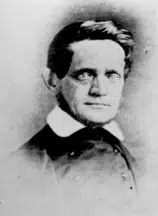
Passing laws was only one part of creating a legal system. Courts had to interpret those laws consistently, especially when Texas rules conflicted with Spanish land practices, Mexican decrees, common-law principles, or incomplete republic statutes.
The leading figure in this work was John Hemphill, who became chief justice of the Republic of Texas in 1841. A lawyer from South Carolina, Hemphill learned Spanish and studied Mexican law after arriving in Texas because he understood that older legal traditions could not simply be ignored.
Hemphill helped develop Texas law involving land titles, marital property, inheritance, procedure, and homestead rights. His long service continued after annexation, when he became chief justice of the new state’s Supreme Court.
He has often been called the “John Marshall of Texas” because his decisions gave structure to a young and sometimes contradictory body of law. Rather than treating the legal transition as a complete break with the past, Hemphill blended civil-law rules with the common-law system adopted by the republic.
His record also reflected the limits of the era. Hemphill was an enslaver and later supported secession, showing that the judges who developed Texas property law could defend institutions that denied basic legal rights to others.
Anson Jones Managed the Legal Transition to Statehood
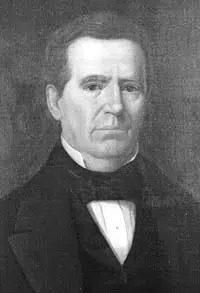
By the time Anson Jones became the republic’s final president in 1844, the central legal question was whether Texas would remain independent or join the United States. His administration handled negotiations involving annexation while attempting to preserve the republic’s authority until the transition was complete.
Texas voters approved annexation and a state constitution in 1845. The United States admitted Texas as the 28th state on December 29, 1845, and the state government formally replaced the republic’s government in February 1846.
The transfer preserved much of what early leaders had created. Courts continued operating, property claims remained subject to Texas law, and major principles involving community property and homesteads survived under the new state constitution.
Texas also retained ownership of its public lands rather than transferring them to the federal government. That decision later shaped railroad expansion, education funding, university endowments, and management of the state’s mineral wealth.
The Foundation Was Durable but Deeply Unequal
Early Texas leaders succeeded in creating a functioning legal system under difficult conditions. Within a decade, they had established constitutional government, elected offices, courts, land policies, property protections, executive departments, and an organized transition from republic to statehood.
Their work was also designed around a limited definition of citizenship. Enslaved people had no freedom, free Black residents faced severe restrictions, Native nations were denied equal standing, and women lacked political rights and full control over many legal decisions.
That mixed legacy is essential to understanding the state’s legal foundation. Early Texas law protected speech, property, juries, and representative government while distributing those protections unequally.
The leaders of the republic did not create the modern Texas legal system in finished form. They created its basic structure and its earliest conflicts—between common law and civil law, private property and public authority, individual liberty and racial exclusion.
Those choices continued long after the Republic of Texas disappeared. They remain visible in the state’s courts, family-property rules, homestead protections, public lands, constitutional traditions, and continuing debates over who receives the full protection of Texas law.
Comments (0)
No comments yet. Be the first to share your thoughts.
Leave a comment