


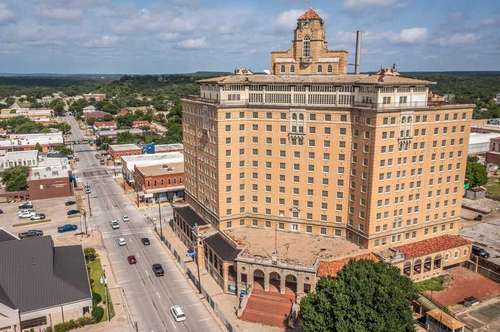
Rising 14 stories above downtown Mineral Wells, the Baker Hotel looks like something from another era. Its grand tower, elaborate architecture, and nearly century-old history make it one of the most recognizable landmarks in North Texas.
When the hotel opened in 1929, it offered the kind of luxury that attracted Hollywood celebrities, wealthy travelers, and visitors hoping to experience the town's famous mineral waters. Guests could enjoy elegant ballrooms, swimming, spa treatments, and entertainment without leaving the property.
But the Baker's story isn't all glamour. It survived the Great Depression, weathered the decline of a once-booming resort town, and eventually sat empty for decades.
Today, an ambitious restoration is bringing renewed attention to the building. And with its fascinating past and enduring ghost stories, the Baker Hotel remains one of Texas' most intriguing historic landmarks.
How Mineral Wells Became a Famous Resort Town
Long before the Baker Hotel existed, people were traveling to Mineral Wells for something unusual: the water.
The town's story began in the late 1870s, when James Alvis Lynch and his family settled in the area. In 1880, they had a well drilled on their property and discovered water with a distinctive mineral taste.
According to local accounts, members of the family believed their health improved after drinking it. Word spread, and soon other people were visiting to try the water for themselves.
By the early 1900s, Mineral Wells had become a popular health resort destination. Visitors came from across the country to drink mineral water, take therapeutic baths, and stay in the town's growing collection of hotels and boarding houses.
One of the most famous attractions was Crazy Water, a mineral water brand that helped put Mineral Wells on the map.
Although the water's supposed ability to cure a wide range of illnesses was never scientifically established, its reputation helped build a thriving tourism industry.
By the 1920s, Mineral Wells needed accommodations that matched its growing ambitions.
That's where the Baker Hotel came in.
Building One of Texas' Grandest Hotels
The Baker Hotel was the vision of Texas hotel entrepreneur Theodore Brasher Baker, better known as T. B. Baker.
Construction began in 1926, with architect Wyatt C. Hedrick designing an impressive high-rise resort that would tower over the surrounding downtown buildings.
The project cost approximately $1.25 million, an enormous investment at the time.
After several years of construction, the hotel formally opened on November 22, 1929.
The timing couldn't have been much worse.
Just weeks earlier, the stock market had crashed, marking the beginning of the Great Depression.
Yet the Baker managed to establish itself as a major resort destination despite the country's worsening economic conditions.
Its combination of mineral-water treatments, luxurious accommodations, and entertainment made it a place where guests could escape their everyday worries.
What Made the Baker Hotel So Luxurious?
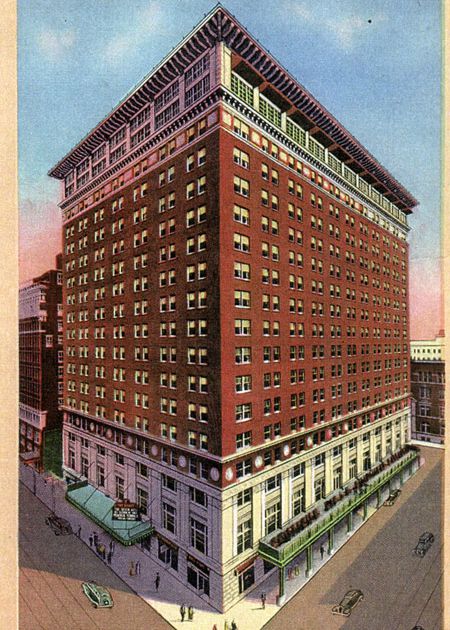
For visitors arriving in Mineral Wells during the 1930s, the Baker Hotel must have been an impressive sight.
The 14-story building combined a high-rise design with Spanish and Mission Revival architectural influences. Its distinctive silhouette quickly became a defining feature of the town's skyline.
Inside, the hotel offered hundreds of guest rooms, elegant gathering spaces, and amenities that were extraordinary for a resort of its era.
Guests could enjoy mineral-water spa treatments, swimming, dancing, dining, and other recreational activities.
The property featured two complete spas, an outdoor Olympic-sized swimming pool, and the famous Cloud Room, an entertainment space high above the streets of Mineral Wells.
The hotel also offered a gymnasium, bowling alley, and multiple dancing areas.
During Prohibition, when alcoholic beverages were restricted, the town's celebrated mineral water provided a fitting alternative refreshment.
The Baker wasn't simply a place to spend the night. It was designed to be an experience.
Hollywood Stars, Famous Guests, and a Glamorous Reputation
During its heyday, the Baker Hotel became a fashionable gathering place for entertainers, politicians, business leaders, and wealthy vacationers.
Among the famous names associated with the hotel are Clark Gable, Judy Garland, and bandleader Lawrence Welk.
Their visits helped reinforce the Baker's reputation as a glamorous destination far beyond the borders of Texas.
The hotel hosted dances, performances, social gatherings, and other events that brought excitement to Mineral Wells.
Stories also connect the hotel to notorious Depression-era outlaws Bonnie and Clyde, although these accounts are generally presented as local lore rather than firmly documented guest records.
Whether visitors came for the mineral baths, the entertainment, or simply the chance to enjoy an upscale getaway, the Baker became a symbol of Mineral Wells at its most prosperous.
The Baker Hotel During World War II
The hotel's success wasn't tied only to tourism.
During World War II, nearby Camp Wolters became one of the nation's major military training installations.
Thousands of soldiers passed through the Mineral Wells area, bringing additional activity to local businesses.
The Baker benefited from the presence of military personnel, visiting families, and other travelers.
Even as the country's priorities shifted from leisure to wartime production and military service, the hotel remained an important part of the town's social and economic life.
The postwar years, however, brought changes that would eventually threaten its future.
Why Did the Baker Hotel Close?
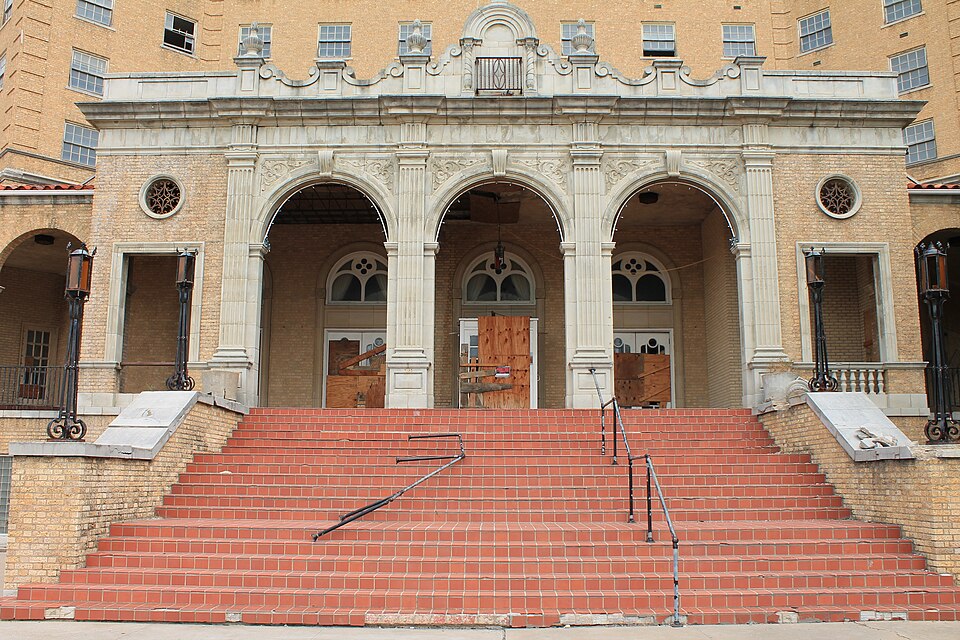
Renelibrary, Baker Hotel, Mineral Wells, Texas (2012), CC BY-SA 3.0.
By the 1950s, Mineral Wells was no longer the resort destination it had once been.
Advances in medicine had weakened the appeal of mineral-water treatments as supposed cures for illness. At the same time, Americans had more vacation choices, and changing travel habits affected traditional resort towns.
The Baker also faced financial and operational challenges.
In 1952, T. B. Baker retired and turned over the hotel business to his nephew, Earl Baker.
Earl continued operating the property until 1963, when the hotel closed for the first time.
But that wasn't quite the end.
In 1965, a group of local civic leaders reopened the Baker in hopes of reviving its former success.
Unfortunately, the business struggled to turn a profit.
The hotel closed again in 1972, ending its long run as one of Mineral Wells' premier destinations.
For decades afterward, the towering building remained a familiar but increasingly deteriorated landmark.
Decades of Abandonment and Preservation Efforts
Even after its closure, the Baker Hotel never completely disappeared from public attention.
Its enormous presence in downtown Mineral Wells made it impossible to overlook.
For longtime residents, it represented the town's prosperous resort era. For architecture enthusiasts and curious visitors, it was a remarkable example of an early twentieth-century luxury hotel.
In 1982, the Baker was added to the National Register of Historic Places, recognizing its significance in Texas architecture and commerce.
But historic recognition alone couldn't pay for repairs.
Restoring such a large building would require extensive work on its structural systems, guest rooms, plumbing, electrical infrastructure, and public spaces.
Over the years, various proposals were discussed, but the scale and expense of the project made redevelopment difficult.
Meanwhile, the hotel's empty corridors and aging interiors became part of its mystique.
The Baker Hotel's Restoration and Planned Reopening
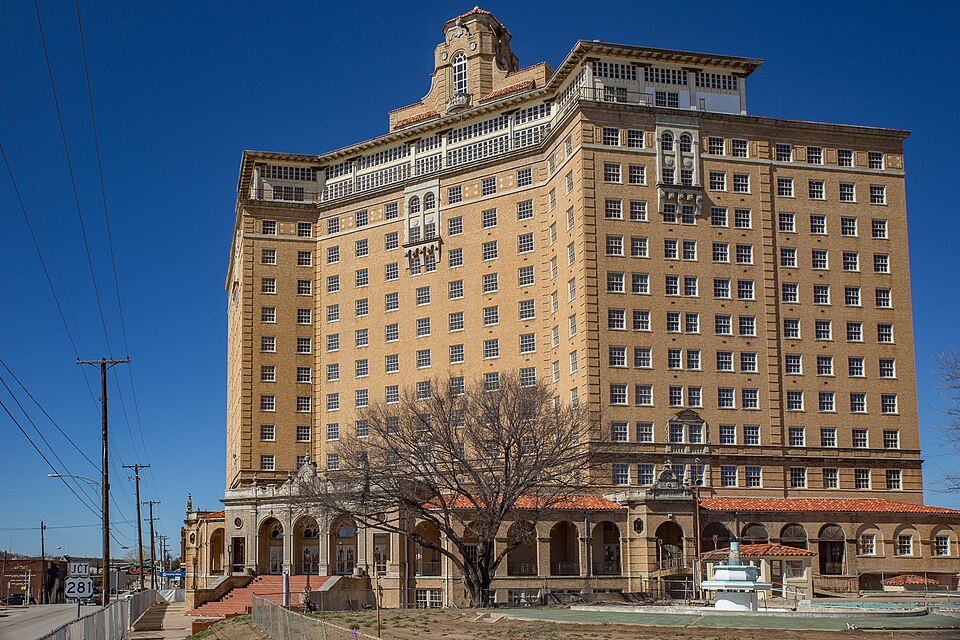
Renelibrary, Baker Hotel, Mineral Wells, Texas (2022), CC BY-SA 4.0.
The Baker's future began taking a more promising turn in 2019, when developers announced a major restoration project.
The original proposal called for an approximately $65 million renovation that would return the historic property to use as a resort and spa.
The work involves far more than cosmetic improvements.
Restoring the building requires preserving its historic architectural character while introducing modern systems and amenities suitable for today's guests.
According to the hotel's official development plans, the restored Baker Hotel and Spa is expected to feature 168 guest rooms, spa facilities, restaurants, event ballrooms, and spaces for business meetings and conventions.
The mineral waters that originally made Mineral Wells famous are also intended to play a role in the renewed resort experience.
The hotel's official website currently lists 2029 as the planned opening year.
Although the timeline has extended well beyond the original announcement, the project represents an important effort to preserve one of Texas' best-known historic hotels.
For Mineral Wells, the Baker's revival is about more than bringing back a place to stay. It's also part of a broader effort to attract visitors and strengthen the historic downtown.
Is the Baker Hotel Really Haunted?
Of course, no discussion of the Baker Hotel would be complete without mentioning its ghost stories.
After decades of vacancy, the building developed a reputation as one of Texas' most talked-about supposedly haunted hotels.
Visitors, paranormal enthusiasts, and local storytellers have shared accounts of unexplained sounds, mysterious figures, and unusual experiences associated with the property.
One frequently repeated legend involves the spirit of a woman said to haunt the hotel's upper floors.
Other stories describe ghostly activity in former guest rooms, hallways, and gathering spaces.
But there's an important distinction between the hotel's documented history and the legends surrounding it.
While the ghost stories have become part of local folklore, there is no reliable evidence establishing that the building is haunted. Some of the more dramatic accounts also lack verifiable historical details.
That hasn't stopped the stories from attracting attention.
For many people, the combination of the hotel's glamorous past, decades of abandonment, and imposing architecture makes it the perfect setting for a ghost story.
Whether you believe in the paranormal or simply enjoy a good mystery, the Baker's haunted reputation adds another layer to its unusual history.
Can You Visit the Baker Hotel in Mineral Wells?
The Baker Hotel stands in downtown Mineral Wells, approximately 50 miles west of Fort Worth.
Its towering exterior remains one of the town's most recognizable sights, and visitors can appreciate the historic building from surrounding public areas.
However, the property is undergoing restoration and is not operating as a hotel. Visitors should not assume that interior access, overnight stays, or public tours are available.
For information about the restoration and future opening, visit the official Baker Hotel and Spa website.
While in Mineral Wells, visitors can also explore the historic downtown, discover the town's mineral-water heritage, and enjoy nearby outdoor attractions such as Lake Mineral Wells State Park.
The hotel's history makes more sense when experienced alongside the town that helped create it.
Interesting Facts About the Baker Hotel
Feature | Details |
|---|---|
Location | Mineral Wells, Texas |
Original opening | November 22, 1929 |
Architect | Wyatt C. Hedrick |
Original cost | Approximately $1.25 million |
Height | 14 stories |
Original accommodations | Approximately 460 rooms and two suites |
Famous features | Mineral-water spas, swimming pool, Cloud Room, ballrooms |
First closure | 1963 |
Brief reopening | 1965 |
Final historic closure | 1972 |
Historic designation | National Register of Historic Places, 1982 |
Planned restored hotel | 168 guest rooms |
Planned reopening | 2029, subject to change |
A Texas Landmark Worth Saving
Few buildings tell the story of Mineral Wells quite like the Baker Hotel.
It rose during the town's mineral-water boom, welcomed famous guests during the golden age of resort travel, and remained a community landmark even after its doors closed.
Its history reflects the changing fortunes of a Texas town that once attracted visitors from across the country.
The restoration offers a chance to preserve that history while giving the building a new purpose.
And perhaps that's what makes the Baker Hotel so fascinating. It's not just the famous guests, elaborate architecture, or ghost stories.
It's the possibility that a place once considered a relic of the past can become part of Mineral Wells' future.

Comments (0)
No comments yet. Be the first to share your thoughts.
Leave a comment