


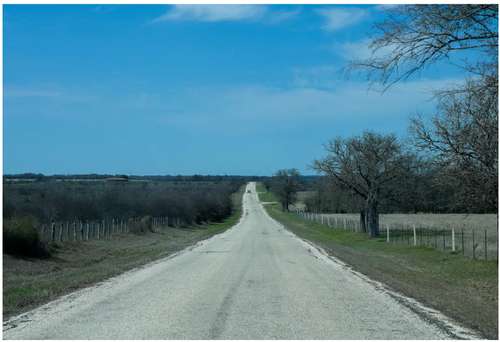
Texas has no shortage of lonely backroads, old bridges, wooded lanes, and rural stretches where stories seem to stick around for generations. Some of these places have long histories. Others became famous because drivers kept sharing the same eerie reports: strange lights, tapping sounds, shadowy figures, and feelings that something was watching from the trees.
Of course, haunted road stories should be taken as folklore rather than proven fact. Still, these legends tell us a lot about Texas history, local memory, and the way certain places capture the imagination. Here are some of the haunted roads in Texas that drivers still talk about.
Bragg Road, Also Known as Ghost Road
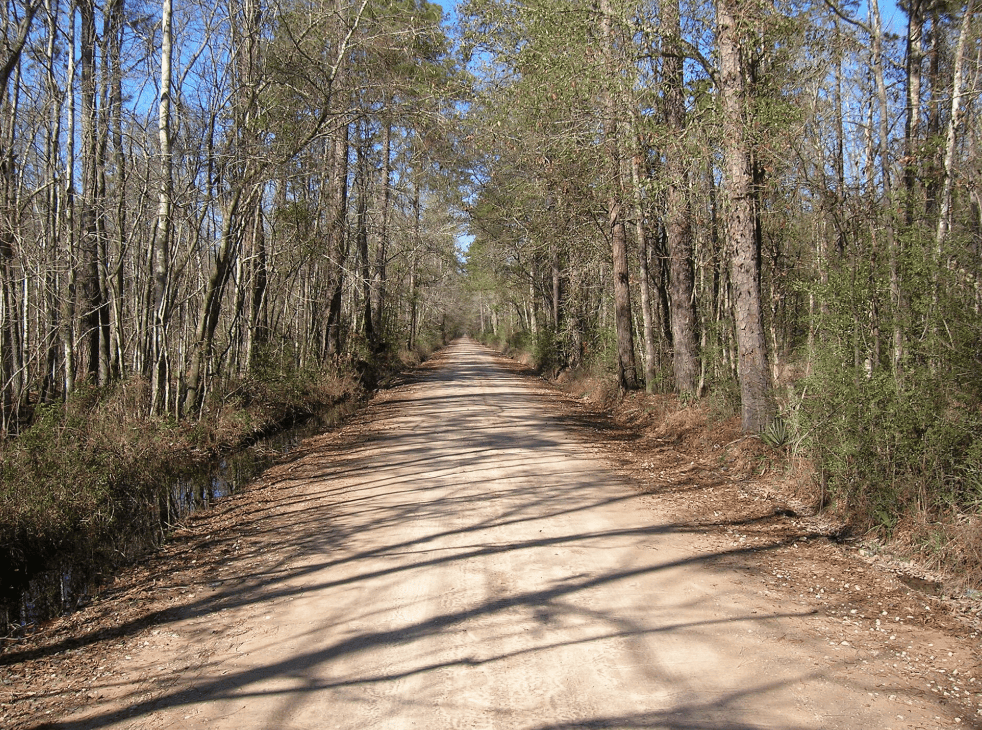
Junglecat, Bragg Road Hardin County TX Looking North, CC BY-SA 4.0
Bragg Road near Saratoga is one of the most famous haunted roads in Texas. It runs through the Big Thicket area of Southeast Texas, a place known for dense woods, swampy ground, and long stretches of darkness at night.
The legend centers on the “Saratoga Light,” a mysterious glow that people claim to see floating down the road. Some say it looks like a lantern. Others describe it as a bright orb that appears in the distance, moves closer, then disappears.
Several explanations have been offered over the years. Some people believe the light comes from car headlights, swamp gas, reflections, or natural optical effects. Local legend gives it a more haunting origin. One popular version says the light belongs to a railroad worker searching for his lost head after a tragic accident.
That story may sound dramatic, but the road’s setting helps explain why the legend has lasted. Bragg Road is long, dark, and surrounded by thick trees. At night, even ordinary lights can look strange when they appear through fog, dust, or branches.
Bowden Road, Better Known as Demon’s Road
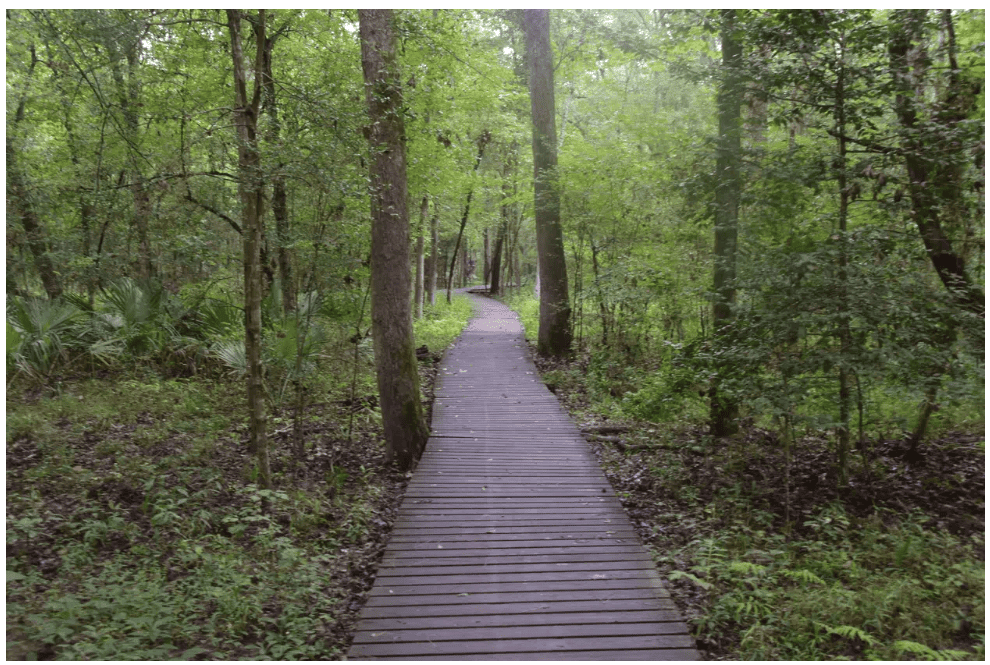
Bowden Road near Huntsville has one of the strongest haunted reputations in East Texas. Many locals know it by its more chilling nickname: Demon’s Road.
The road is often linked with Martha Chapel Cemetery, which sits in the area and has its own collection of ghost stories. Drivers and visitors have reported strange shadows, unsettling noises, and a heavy feeling while traveling the road after dark. Some stories also mention figures appearing near the trees or along the roadside.
As with many haunted places, the road’s reputation grew through repeated storytelling. A quiet rural road, an old cemetery, and thick woods create the perfect setting for local legend. Once a place earns a nickname like Demon’s Road, every odd sound or unexplained movement becomes part of the larger story.
The area also shows how cemetery folklore and road folklore often overlap. A road that leads to an old burial ground naturally becomes a place where people expect something unusual to happen.
Patterson Road in Houston
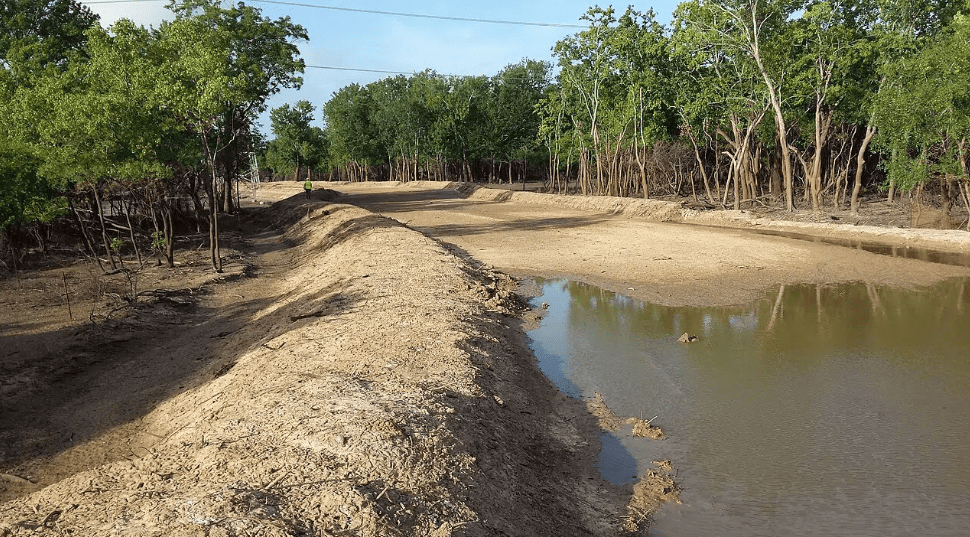
U.S. Army Corps of Engineers from USA, Addicks and Barker Update (29266141951), CC BY 2.0
Patterson Road in Houston is one of the best-known haunted road stories in the city. The most famous part of the legend focuses on a bridge along the road.
According to local stories, drivers who stop on or near the bridge at night may hear tapping sounds on their cars. The legend usually connects the tapping to ghostly soldiers, often described as spirits from a Civil War-era story tied to the area.
The details vary depending on who tells the tale. Some people say the spirits are warning drivers away. Others say the tapping feels like invisible hands knocking on the vehicle from all sides.
What makes Patterson Road interesting is its urban setting. Unlike some haunted roads hidden deep in the woods, this one sits in a major city. That contrast gives the story extra appeal. It suggests that ghost stories do not need remote cabins or abandoned towns. Sometimes they live beside busy streets, neighborhoods, and everyday traffic.
Stagecoach Road in Marshall
Stagecoach Road in Marshall has a long history and an even longer list of legends. The road dates back to the 1800s, when stagecoaches and travelers moved through the area. That old travel history gives the road a strong connection to the past.
Drivers have reported ghostly lights, strange sounds, and figures appearing in the fog. Some stories mention a woman in white. Others describe ghostly wagons or stagecoaches moving along the old route.
The road’s physical setting adds to the atmosphere. Parts of it are lined with trees, and the older sections can feel far removed from modern traffic. That sense of age matters. Haunted road legends often grow stronger in places where people can still imagine earlier travelers passing through.
Stagecoach Road also shows how transportation history can become ghost lore. Roads that once carried stagecoaches, wagons, and early settlers often become linked with stories of accidents, hardship, and restless spirits.
Old Alton Road and Goatman’s Bridge
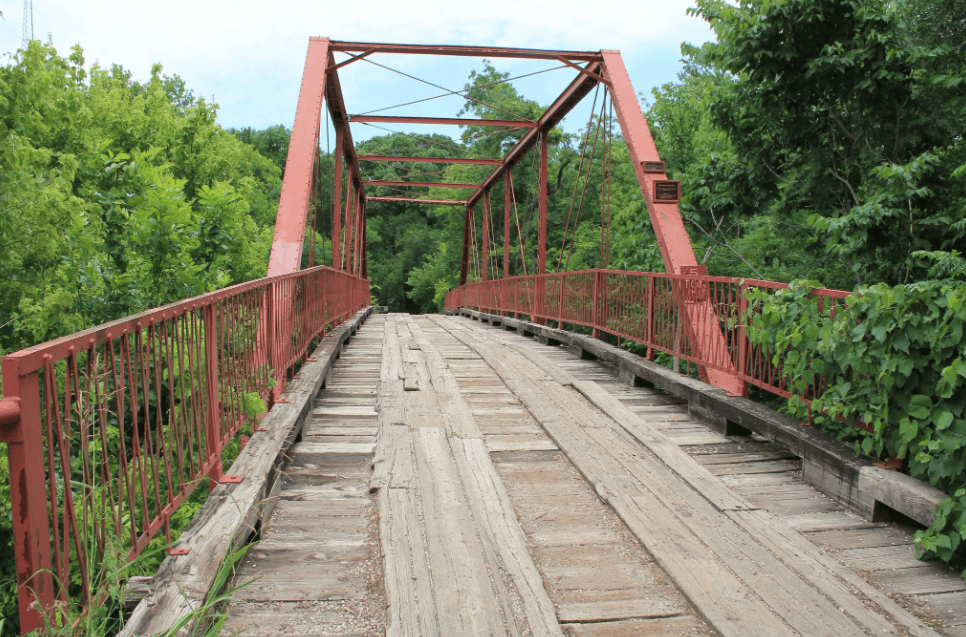
Renelibrary, Altonbridge3, CC BY-SA 3.0
Near Denton, Old Alton Bridge is often called Goatman’s Bridge. While the bridge itself is now known as a historic structure, the surrounding road and wooded area have become a major part of North Texas ghost lore.
The bridge was built in 1884 and once carried traffic across Hickory Creek. Vehicle traffic was later moved to a newer bridge, but Old Alton Bridge remains a popular spot for visitors, photographers, and people interested in local legends.
The most famous story involves a figure known as the Goatman. Versions of the legend differ, but many describe a terrifying presence near the bridge or in the surrounding woods. Visitors have reported strange noises, lights, shadows, and the feeling of being followed.
Because the bridge is no longer a regular driving route, the legend has shifted from a road story into a haunted landmark story. Still, drivers continue to talk about the area because Old Alton Road and the bridge remain closely tied together in Texas folklore.
Why Haunted Road Stories Last
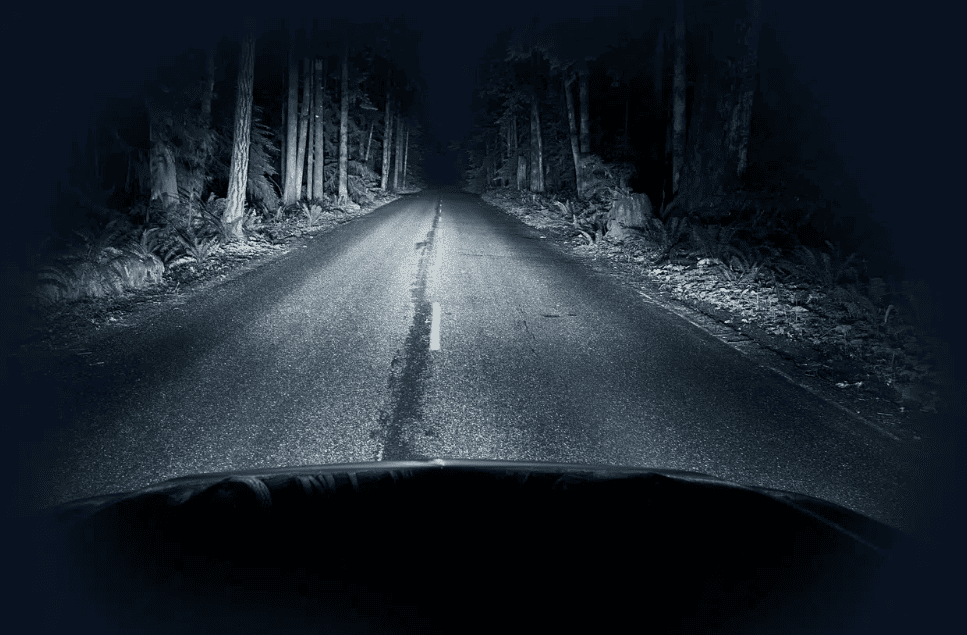
Haunted roads stay in people’s minds because they combine fear with movement. A haunted house asks people to enter and stay. A haunted road asks them to keep driving, often through darkness, woods, fog, or silence.
These stories also spread easily because they are simple to test. Someone hears about a road, gathers a few friends, and drives there at night. If nothing happens, the story continues anyway. If something strange does happen, the legend gets stronger.
There are also practical reasons why roads become spooky:
- Rural roads are often poorly lit.
- Trees, fog, and uneven ground can distort what drivers see.
- Old bridges and cemeteries already carry a sense of history.
- Night driving makes ordinary sounds feel more mysterious.
- Local legends shape what people expect to experience.
That does not make the stories meaningless. Folklore does not have to be proven in a scientific sense to matter. These tales show how communities remember places, pass down warnings, and turn ordinary roads into shared stories.
The Line Between History and Legend
Many haunted road stories mix real history with uncertain details. A bridge may truly be old. A road may really date back to the 1800s. A cemetery may contain graves from earlier generations. From there, legend fills in the gaps.
That mix is part of what makes these roads interesting. They invite people to learn about local history while also enjoying the mystery. Even when the ghostly details cannot be verified, the places themselves often have real historical value.
For example, Stagecoach Road points back to early travel in East Texas. Old Alton Bridge reflects 19th-century bridge building and local transportation history. Bragg Road connects to the Big Thicket, one of Texas’s most distinctive natural regions.
The ghost stories may bring people in, but the history keeps the places worth discussing.
A Word of Caution for Curious Drivers
Anyone interested in visiting these roads should be careful and respectful. Many haunted locations are near private property, cemeteries, active roads, or rural areas with limited lighting. Trespassing, blocking traffic, or driving recklessly can turn a spooky outing into a real problem.
It is also worth remembering that local residents live near many of these places. For them, these roads are part of everyday life, not attractions.
The safest approach is simple: stay on public roads, obey posted signs, avoid stopping in dangerous areas, and leave cemeteries and private land undisturbed.
Final Thoughts
Texas haunted roads continue to attract attention because they blend history, mystery, and local storytelling. Bragg Road has its ghost light. Bowden Road has its dark reputation. Patterson Road has its tapping bridge. Stagecoach Road carries stories from an older Texas. Old Alton Road and Goatman’s Bridge remain a major part of North Texas legend.
Whether someone believes the stories or sees them as folklore, these roads have earned a lasting place in Texas imagination. They remind us that every old road carries more than traffic. Some carry stories that refuse to fade.

Comments (0)
No comments yet. Be the first to share your thoughts.
Leave a comment