


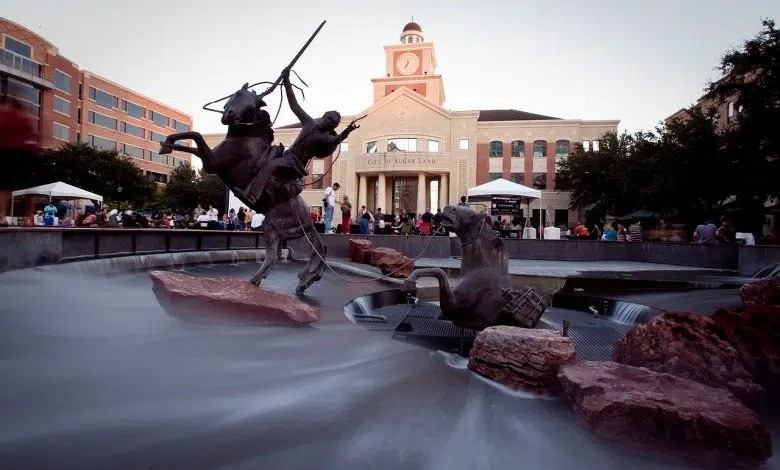
Sugar Land, Texas, is a thriving city in Fort Bend County, southwest of Houston. Once a sugar-producing plantation community, it developed into an industrial company town before becoming a modern suburban city. Its history includes sugar mills, railroads, historic dairies, and even a connection to the Texas Revolution. Today, Sugar Land combines its agricultural heritage with shopping, entertainment, professional baseball, and residential communities.
Key Takeaways
- Sugar Land developed from nineteenth-century sugar plantations near the Brazos River.
- The city's earliest commercial sugar mill was established in 1843, while Imperial Sugar became central to its development in the early twentieth century.
- Sugar Land officially incorporated as a city in 1959 after decades as a company town.
- The city has historically been spelled both "Sugar Land" and "Sugarland."
- Santa Anna's army reportedly passed through the area during the Texas Revolution in 1836.
- Sugar Land once operated dairies, a creamery, and a paper mill alongside its sugar industry.
- The city is home to the Sugar Land Space Cowboys, a Triple-A baseball affiliate of the Houston Astros.
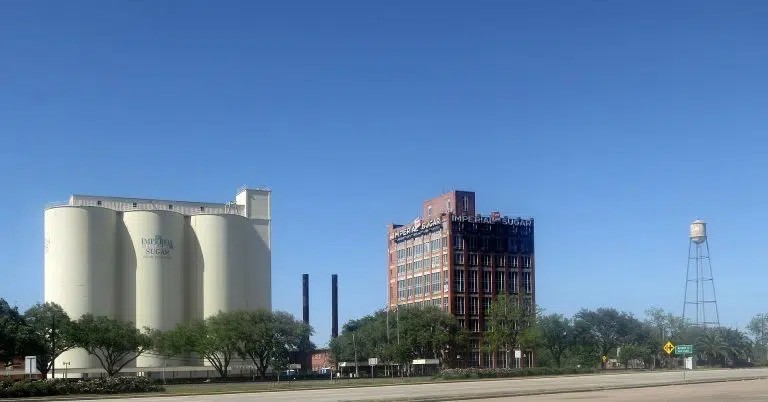
- The former Imperial Sugar refinery remains an important landmark despite closing in 2003.
History of Sugar Land
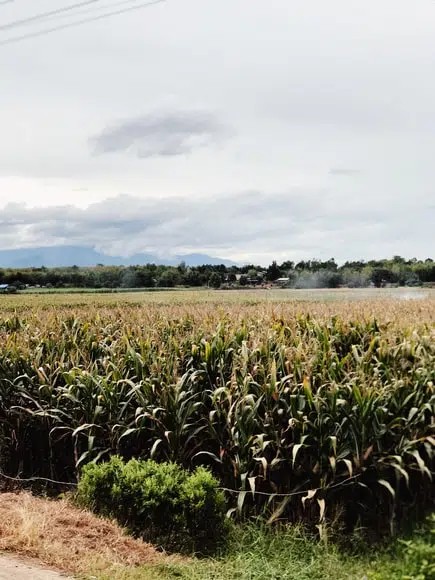
Sugar Land's history dates to the early nineteenth century, when the region was part of Mexican Texas. In 1828, Samuel May Williams received land associated with Stephen F. Austin's colony. The fertile soil near the Brazos River encouraged agriculture, particularly the cultivation of sugarcane, cotton, and corn.
During the 1830s, the Williams family established Oakland Plantation, which became an important agricultural operation. In 1843, a sugar mill was built along Oyster Creek. Benjamin Franklin Terry and William Jefferson Kyle later acquired the property in 1853, helping develop the community's early infrastructure and transportation connections.
Sugar production eventually became the area's defining industry. The community developed around plantations, mills, and transportation facilities, laying the foundation for the city known today. However, this agricultural history also included enslaved labor and, later, convict leasing, both important parts of Sugar Land's historical development.
How Imperial Sugar Shaped the City
Sugar Land's transformation into an industrial community accelerated during the late nineteenth century. Businessman Edward H. Cunningham expanded local sugar operations and constructed a refinery in 1896. His enterprise included manufacturing facilities and supporting businesses, although financial difficulties eventually affected the operation.
In 1908, Isaac H. Kempner and William T. Eldridge acquired and modernized the refinery and surrounding properties. Their investments helped establish Imperial Sugar as the community's dominant business. Sugar Land subsequently developed into a company town, with the business influencing employment, housing, and daily life.
The company built homes, schools, churches, and other facilities for employees and their families. Although local sugarcane cultivation ended in 1928, the refinery continued processing imported raw sugar. Imperial Sugar remained a major part of the community until the refinery closed in 2003.
Sugar Land Has Been Spelled Two Different Ways
One interesting fact about Sugar Land is that its name has historically appeared as both "Sugar Land" and "Sugarland." Early written records, including the 1860 census, used the two-word version. However, spelling practices varied as the community developed around its growing sugar industry.
The one-word spelling became associated with certain businesses, including Sugarland Industries. Historical documents from the early twentieth century sometimes used this form, creating variations in official and commercial records. The different spellings reflected the community's gradual development rather than two separate places.
When Sugar Land incorporated as a city in 1959, the two-word spelling became its official municipal name. The distinction remains visible today because some businesses and historical references retain the older one-word form. The city's unusual naming history reflects its close connection to sugar production.
Sugar Land Played a Role in Texas History
Sugar Land's location near the Brazos River placed it along important routes used during Texas's early development. During the Texas Revolution in 1836, Mexican forces commanded by General Antonio López de Santa Anna moved through areas of present-day Fort Bend County while pursuing the Texian army.
Local historical accounts indicate that Santa Anna's troops passed near what is now Kempner High School before continuing toward the area around Gillingham Lane and Highway 90A. Their movements formed part of the campaign that eventually led to the Battle of San Jacinto.
Sugar Land also developed alongside Texas's early railroad industry. The Buffalo Bayou, Brazos and Colorado Railway, recognized as Texas's first operating railroad, extended through the area during the 1850s. Its route helped connect agricultural producers with wider markets and supported the growth of local sugar operations.
Sugar Land Once Had Dairies and a Paper Mill
Although sugar production dominated the local economy, Sugar Land once supported several other agricultural and industrial businesses. Two dairies operated in the community, including one associated with Edward H. Cunningham's estate. Another was located near Oyster Creek and Ulrich Street.
The dairies supplied milk and other products to residents during the company's early development. Cattle grazed on land that later became part of the Constellation Field area. Dairy operations continued into the twentieth century, with one remaining active until the late 1940s.
Sugar Land also operated a paper mill connected with its sugar industry. The facility processed fibrous material left after sugarcane was crushed, producing thick paper resembling brown wrapping paper. This operation demonstrated how manufacturers used agricultural byproducts to support additional industrial activities.
Eldridge Road Was Once Called KPRC Road
One lesser-known detail about Sugar Land involves the history of Eldridge Road. Before receiving its current name, part of the roadway was known locally as KPRC Road. The unusual name came from a nearby radio broadcasting facility rather than a traditional geographic landmark.
In 1929, Houston radio station KPRC operated a transmitter tower on the eastern side of the road, north of Highway 90A. The tower became a recognizable local feature, and residents began referring to the nearby roadway by the station's call letters.
The road was eventually renamed Eldridge Road, reflecting another important name associated with Sugar Land's development. William T. Eldridge helped transform the community through his partnership with Isaac H. Kempner. The roadway's changing name preserves connections to both the area's broadcasting history and industrial past.
Sugar Land Has Connections to Hollywood
Sugar Land also has an interesting connection to filmmaker Steven Spielberg. His 1974 movie The Sugarland Express was partly filmed in the area. The film starred Goldie Hawn and followed a couple involved in a dramatic police pursuit across Texas.
Production took place at several Texas locations, including the Jester State Prison Farm near Sugar Land. Other scenes were filmed in communities such as Richmond, Floresville, and San Antonio. Although the movie features Sugar Land in its story, not every location shown on screen was filmed there.
The Sugarland Express became Spielberg's first theatrically released feature film. Its title uses the one-word spelling "Sugarland," adding another recognizable example of the city's historical spelling variation. The production remains an interesting connection between this Texas community and American cinema.
Sugar Land's Sports and Modern Attractions
Today, Sugar Land is known for more than its industrial history. The city features master-planned neighborhoods, shopping districts, parks, and entertainment destinations. Sugar Land Town Square serves as a central gathering place, offering restaurants, retail stores, public events, and community activities.
Professional baseball is another important attraction. The Sugar Land Skeeters began playing at Constellation Field in 2012 before joining the Houston Astros' minor league system in 2021. Renamed the Sugar Land Space Cowboys in 2022, the team competes at the Triple-A level and won the Triple-A National Championship in 2024.
The city has also hosted other sports activities, including junior hockey through the former Sugar Land Imperials. With modern recreational facilities and a diverse residential community, Sugar Land has transformed considerably from its plantation and company-town beginnings. Its historical landmarks and modern attractions together reflect the city's changing identity.

Comments (0)
No comments yet. Be the first to share your thoughts.
Leave a comment