


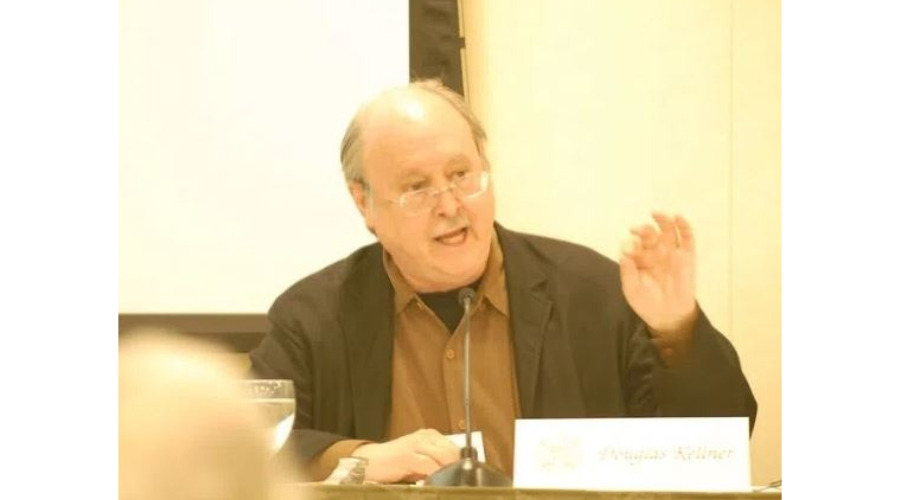
Image: Nlopez24-hcf21, Douglas Kellner, CC BY-SA 4.0
You won’t want to miss exploring the works of Douglas Kellner, an American philosopher and cultural critic whose critical media theory shapes modern thought. Influenced by the Frankfurt School, Kellner dissects media culture and spectacle, shedding light on how media narrative and culture impact societal norms.
His focus on critical media literacy empowers you to challenge media narratives and their role in shaping values. You’re just getting started on uncovering his profound insights.
Emergence and Influence in Media Theory

Although Douglas Kellner’s rise as a media theorist took shape in the 1980s, his influence swiftly permeated the study of media culture.
You’ll find his work deeply embedded in critical theory, drawing from the Frankfurt School to understand media’s societal impact. By integrating media literacy education, Kellner empowers you to dissect media narratives, revealing the underlying power structures at play.
His identification of media culture underscores how media shapes public consciousness and societal norms. Engaging with cultural conflicts and the “culture wars” in the U.S., Kellner navigates the complex landscape of Western Marxism and French postmodernism.
His work challenges you to critically assess media’s pervasive role in shaping contemporary society.
Intellectual Foundations and Theoretical Synthesis
While Douglas Kellner’s intellectual foundation lies deeply in Western Marxist theory, his work is profoundly shaped by the Frankfurt School and British cultural studies.
You can see his commitment to critical social theory in how he tackles contemporary society’s media culture. Kellner’s approach synthesizes diverse theoretical strands, merging Marxist critique with postmodern cultural theory to address the challenges posed by modern media.
He emphasizes the importance of critical media literacy, encouraging you to analyze media culture’s role in shaping societal norms and values. By identifying media culture as an essential concept, Kellner offers a framework to understand media’s pervasive influence.
Despite facing analytical challenges, his theoretical synthesis provides a powerful lens for understanding today’s complex media landscapes.
Defining Concepts: Media Culture and Media Spectacle
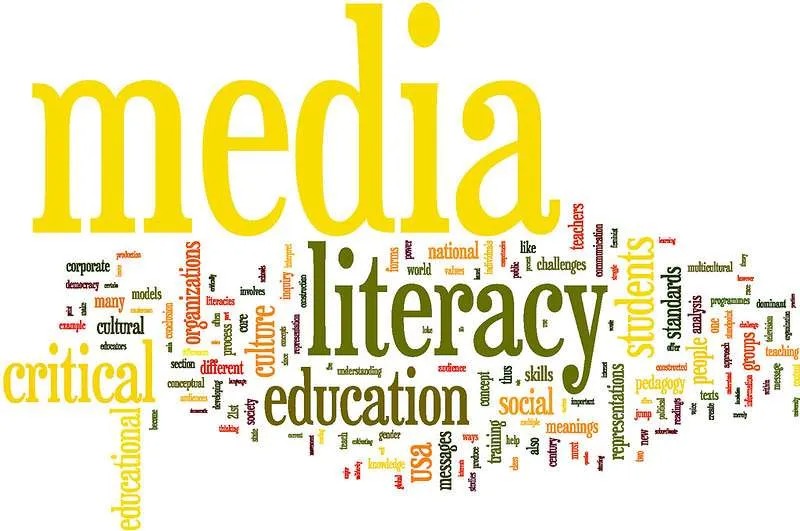
Image: Nlopez24-hcf21, Kellner Wordle, CC BY-SA 4.0
Douglas Kellner’s exploration of media culture and media spectacle provides a critical framework for understanding how media shapes societal norms and individual identities. By defining media culture, Kellner highlights its role in influencing values and ideologies, reflecting dominant narratives in society and culture.
You’re encouraged to question how these narratives affect perceptions of reality and identity. Media spectacle, another of Kellner’s contributions, serves as a lens for analyzing how media events distract and manipulate audiences, often upholding existing power structures.
His work urges you to adopt critical media literacy, empowering you to dissect the messages conveyed through media. By doing so, you can recognize the contradictions within media culture, acknowledging its capacity for empowerment and its risks of reinforcing conformity.
Navigating Analytical Challenges in Media Studies
Having analyzed the defining concepts of media culture and media spectacle, you can now turn your attention to the analytical challenges present within media studies.
Douglas Kellner’s work reveals contradictions in theoretical frameworks that require careful navigation. You must adopt critical media literacy to address these complexities effectively, transcending simplistic interpretations of media landscapes.
Kellner highlights tensions between immanent and transcendent critiques, which complicate the application of his theories across different contexts. Understanding these challenges involves recognizing the potential for oversimplified conclusions that can obscure the multifaceted influences of media on society.
Key Publications and Contributions to Philosophy
Insight into Douglas Kellner’s academic career reveals his vital contributions to philosophy and media studies. His book Postmodern Theory: Critical Interrogations explores critical theory, intertwining media studies and cultural criticism to analyze contemporary social systems.
In Television and the Crisis of Democracy, Kellner examines media’s influence on democratic discourse and public engagement, highlighting the intersection of culture and politics. He co-authored Camera Politica, which scrutinizes the politics and ideology embedded in Hollywood films, shedding light on their societal impact.
Additionally, Jean Baudrillard: From Marxism to Postmodernism and Beyond traces intellectual shifts from Marxism to postmodern critiques. Through these publications, Kellner emphasizes the necessity of critical media literacy to navigate and understand the complexities of modern social dynamics.
Professional Engagement and Academic Impact
Building on his influential publications, Kellner’s professional engagement extends far beyond the written word, shaping both academic and public discourse.
As a former Professor of Education at UCLA, he engages you in critical theory and social philosophy, guiding you through the complexities of media studies and cultural criticism.
His teachings and mentorship foster a deep understanding of how media influences democracy and social norms.
Future Directions in Critical Media Literacy
As society continues to be shaped by rapidly changing media landscapes, Douglas Kellner sees critical media literacy as an important tool for navigating this complex terrain. He believes integrating it into educational curricula empowers you to engage critically with media culture and media spectacle.
By understanding socio-political dynamics, you can challenge dominant ideologies and become more discerning of the media’s influence on public consciousness. Kellner’s work underscores the need to analyze how media spectacles can distort reality and encourage uncritical thinking.
Moving forward, fostering collaborative research and interdisciplinary dialogue is vital. This approach helps address challenges posed by evolving media landscapes and technological advancements, ensuring you stay informed and critically engaged in an ever-changing world.

Comments (0)
No comments yet. Be the first to share your thoughts.
Leave a comment