


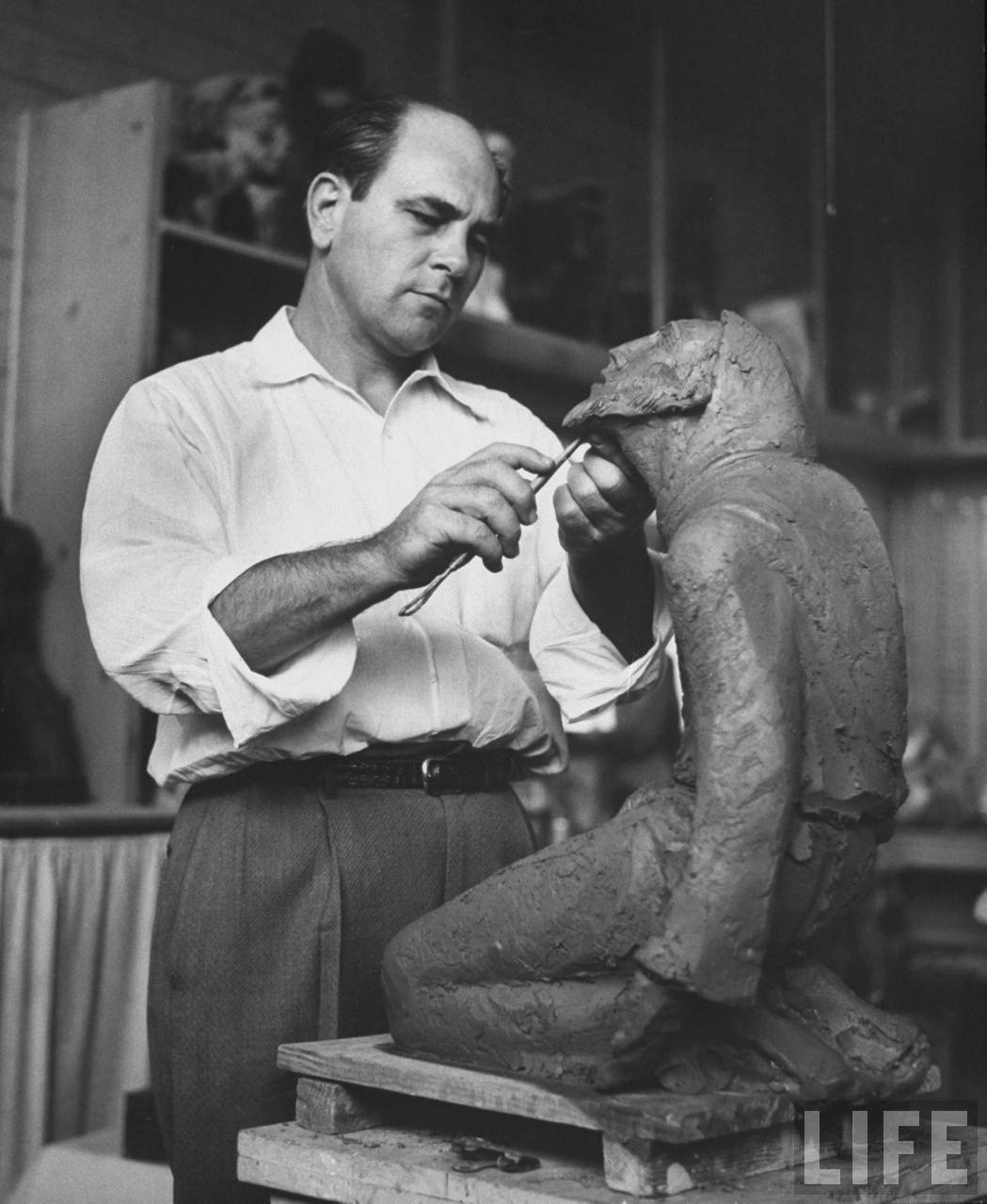
Image: Photographer: Joseph Scherschel, 54a2d193657dbb1c large, CC BY-SA 4.0
Charles Umlauf was born in Michigan but discovered his artistic voice in Texas, capturing the state’s spirit through his timeless sculptures and influential teaching. His career began with early commissions and guidance from master sculptors, leading to key public works through the WPA Federal Art Project. As a beloved mentor at the University of Texas, he shaped future artists and earned accolades like the Guggenheim Fellowship. There’s much more to explore about his lasting legacy and works.
Early Life and Background
Although Charles Umlauf was born in South Haven, Michigan, his family’s German and Alsatian roots strongly influenced his upbringing. Umlauf was the sixth of eight children born to immigrant parents who faced anti-German hostility during World War I. This led the family to move to Chicago in 1918, seeking improved opportunities.
Despite adversity, Umlauf’s childhood laid the foundation for his Texas career. His early years were filled with creativity, including crafting a life-size sand sculpture by age ten on the shores of Lake Michigan.
The deaths of his father in 1922 and mother in 1928 left his older sister Marie to support him—enabling his passion for sculpture to grow.
Artistic Discovery and Education
Umlauf’s path from a creative child to a rising artist is truly inspiring. He created a life-size sand sculpture at a young age, signaling his early artistic promise.
His formal art education began at the Art Institute of Chicago, where he enrolled in weekend classes funded by his sister. Under the mentorship of sculptors Lorado Taft and Albin Polasek, Umlauf honed his skills. At just eleven years old, he received a commission to sculpt a full-sized lion.
His career progressed further when he joined the University of Texas at Austin in 1941, where his teaching shaped the future of sculpture. The University of Texas Press has documented his impact on American art education.
Career Beginnings and Influences
In vibrant Chicago, Umlauf’s artistic journey gained early momentum. Weekend classes at the Art Institute of Chicago, funded by his sister Marie, established his foundation.
He later studied full-time with acclaimed sculptors Albin Polasek and Lorado Taft, refining his form and thematic voice.
By age eleven, he completed his first major commission—a life-sized lion sculpture. He also assisted Viola Norman at the Chicago School of Sculpture, which provided vital experience.
From 1934 to 1941, Umlauf contributed to the WPA Federal Art Project, creating works like “War Mother,” which blended expressionism with realism, influenced by masters like Rodin and Donatello.
Professional Development and Achievements
Umlauf’s foundational years in Chicago led to a remarkable artistic career. His time with the WPA Federal Art Project from 1934 to 1941 prepared him for national recognition, with works like “War Mother” catching the attention of the University of Texas, where he joined the faculty in 1941.
Over the next four decades, Umlauf became a cornerstone of Texas’s artistic landscape, retiring as Professor Emeritus in 1981. His accolades include a Guggenheim Fellowship and being named Texas Artist of the Year by the Art League of Houston in 1985.
His contributions to the arts are also documented in publications with the University of Texas Press and immortalized in the UMLAUF Sculpture Garden and Museum in Austin.
Mentorship and Teaching Legacy
While his sculptures remain revered, Charles Umlauf’s greatest impact may be as an educator and mentor.
Teaching at the University of Texas at Austin for 40 years, Umlauf guided hundreds of students, including notable names like Farrah Fawcett. He also encouraged students to model for sculptures, giving them firsthand experience in studio practice.
Known for being a demanding yet caring mentor, he received the Teaching Excellence Award, a testament to his commitment to the arts. Among his students was Bob “Daddy-O” Wade, a key figure in Texas contemporary art.
Today, the UMLAUF Sculpture Garden and Museum continues this educational mission, providing learning resources for aspiring artists.
Signature Sculptures and Themes
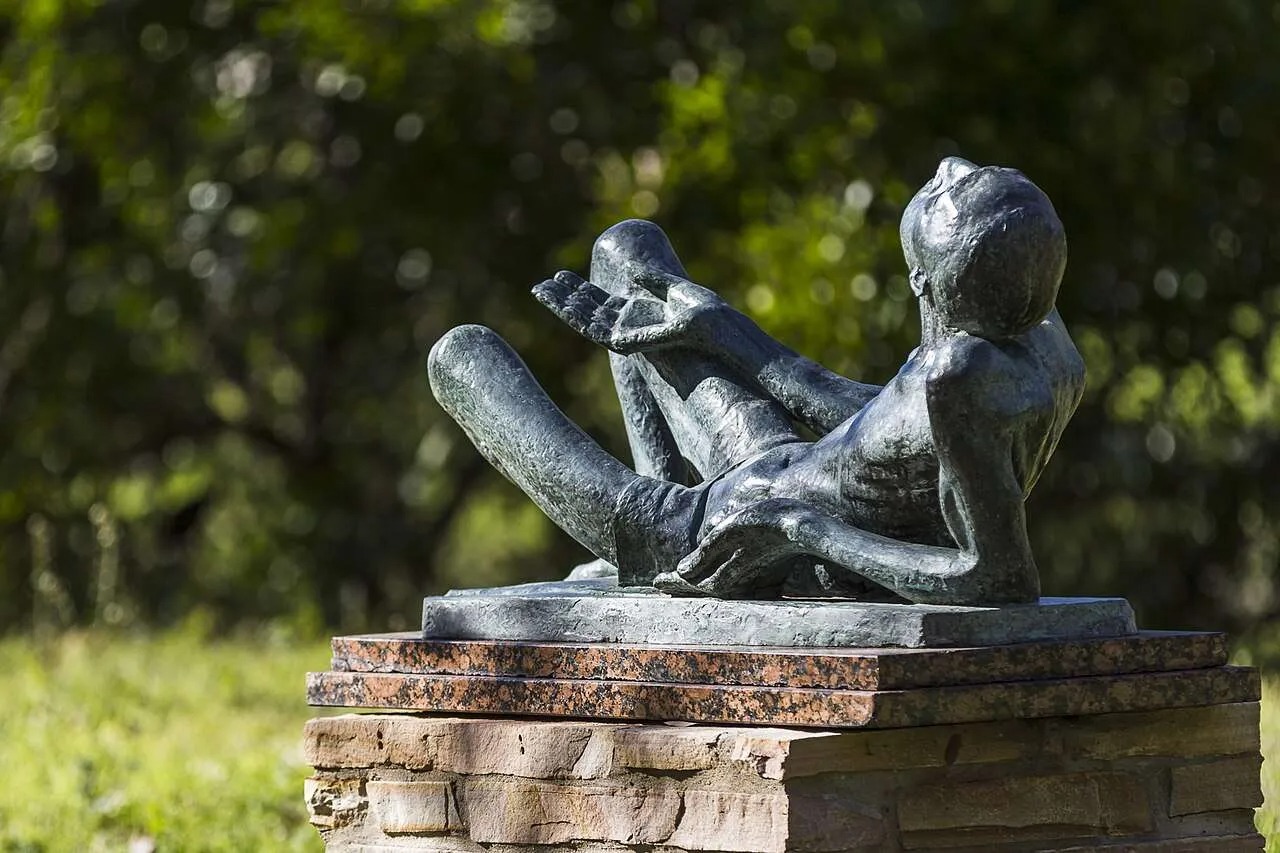
Image: Dieterkaupp, Lazarus 1950, bronze, CC BY-SA 4.0
Charles Umlauf’s works are defined by powerful themes and emotional depth, showcasing a versatile and expressive artistic language.
His sculpture “Refugees” explores displacement and human resilience, echoing post-war realities and his family’s immigrant history.
His 1950 bronze “Lazarus” embodies a fusion of religious narrative and dramatic form, capturing the essence of rebirth.
The aluminum “Crucifixion” conveys stark spiritual symbolism, while “Poetess”—a cast stone tribute to his wife Angeline—reveals the personal side of Umlauf’s work.
Above all, “Hope of Humanity” stands out as a symbol of optimism and universal empathy, recurring themes across his life’s body of work.
Recognition and Awards
Throughout his storied career, Charles Umlauf earned prestigious honors that cemented his legacy.
His awards include a Guggenheim Fellowship and a Ford Foundation Grant, reflecting national recognition of his contributions.
In 1985, the Art League of Houston named him Texas Artist of the Year, and in 1993, he was honored as Alcalde (civic leader) by the city of San Antonio for his cultural impact.
His sculptures are featured in top institutions like the Smithsonian and the Metropolitan Museum of Art, underscoring his national relevance. His published works with the University of Texas Press further enriched the academic and artistic communities.
The UMLAUF Sculpture Garden and Museum
Located at 605 Azie Morton Road in Austin, Texas, the UMLAUF Sculpture Garden and Museum offers a tranquil space where nature and sculpture harmonize.
Established in 1991, the garden displays more than 60 outdoor sculptures and over 130 works in its full collection, most by Charles Umlauf himself.
The museum hosts community events such as UMLAUF After Dark, Family Days, and Summer Camps, nurturing art appreciation among all ages.
Supported by grants from the National Endowment for the Arts and the Texas Commission on the Arts, the museum is open Tuesday through Sunday, inviting visitors to experience Umlauf’s art in a peaceful, immersive setting.

Comments (0)
No comments yet. Be the first to share your thoughts.
Leave a comment