


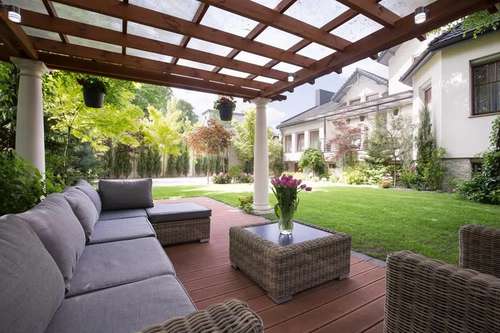
In Texas, having a patio feels like a natural extension of the home. Warm evenings, open skies, and plenty of sunshine make outdoor living part of everyday life. The challenge is that same sun can turn a patio into an oven long before the day is over.
A patio that stays cool is not about eliminating heat completely. It is about managing it. When a space is designed with the Texas climate in mind, outdoor living becomes realistic even in the middle of summer. The key is understanding how heat builds up and making choices that limit it rather than amplify it.
Whether you are starting from scratch or trying to improve an existing patio, thoughtful planning makes all the difference.
Why Patios Get So Hot in Texas
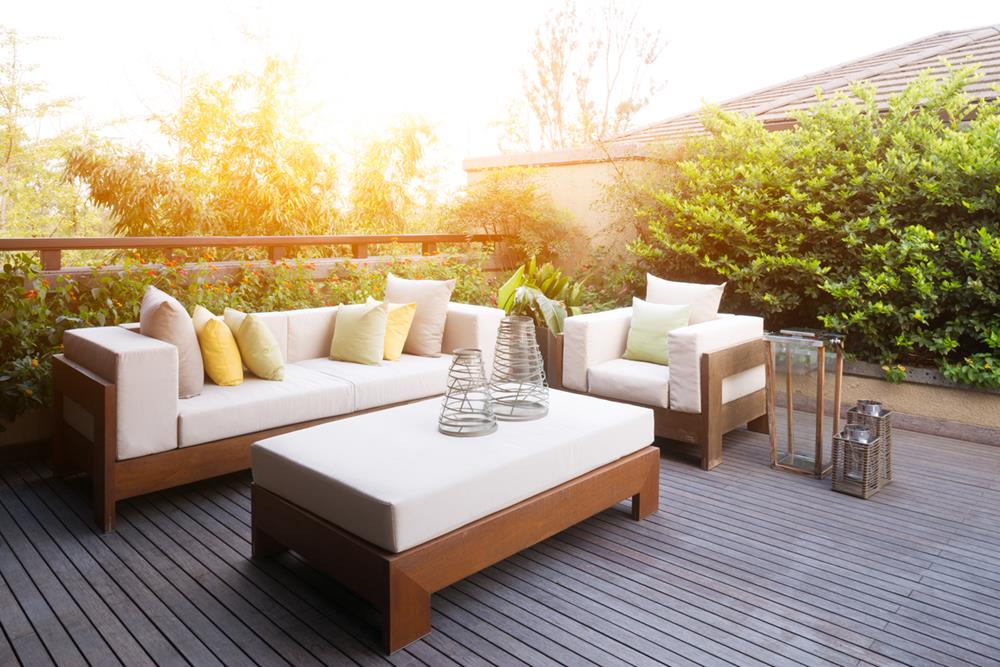
Most patios heat up quickly because the materials and layout work against them. Hard surfaces absorb sunlight for hours, then release that heat upward. By midafternoon, the patio itself becomes a heat source.
Concrete, brick, stone, and metal all store heat. When these materials sit in direct sun with limited airflow, temperatures rise fast. Nearby walls, fences, and even the house can reflect sunlight back into the space, trapping warmth where you least want it.
The goal is not to fight the sun head-on. It is to reduce how much heat the patio absorbs, block direct sunlight when it matters most, and keep air moving through the space.
Choosing the Best Patio Location
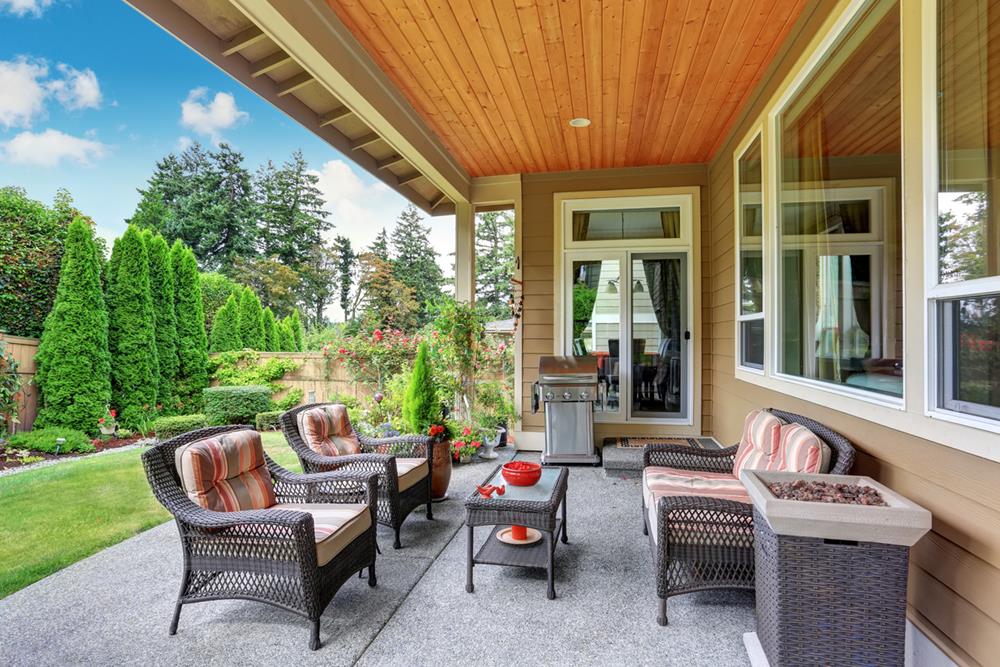
If you are building a new patio, placement is one of the most important decisions you will make. In Texas, sun exposure changes dramatically based on direction.
West-facing patios tend to be the hottest. The afternoon sun is intense and low, which makes shade harder to manage. East-facing patios warm up early but cool down sooner, making them more comfortable later in the day. North-facing patios usually stay the most consistent and comfortable overall.
For existing patios, spend a few days paying attention to sun patterns. Notice when the space becomes uncomfortable and where shade naturally falls. That information will guide later decisions about shade, seating, and cooling features.
Materials That Help Keep a Patio Cooler
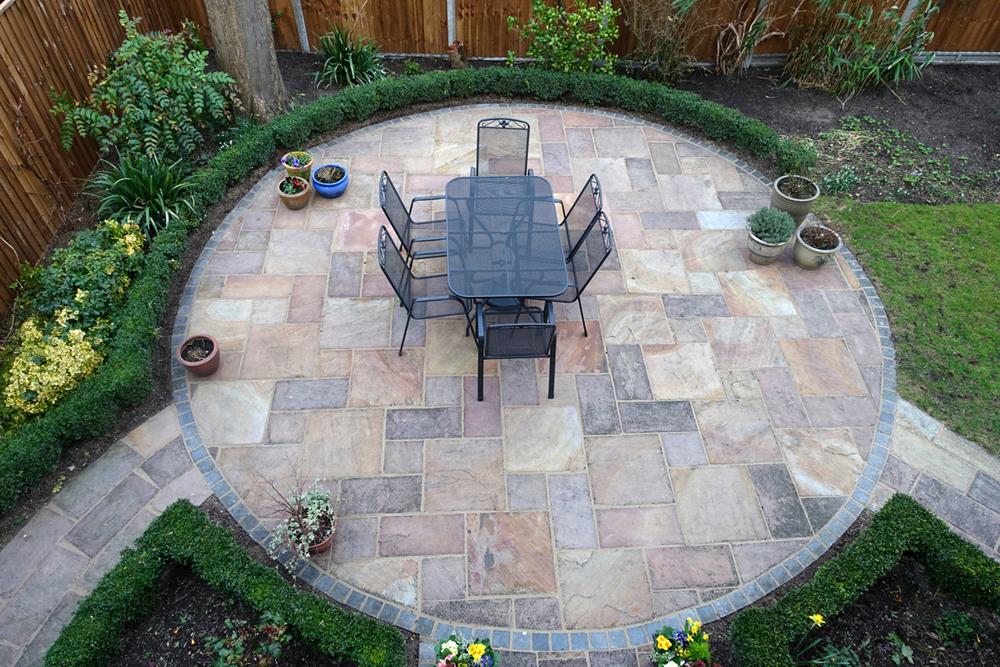
The surface of your patio plays a major role in how hot it feels. Some materials absorb and hold heat much more than others. Choosing wisely can lower surface temperatures significantly.
Materials that tend to perform better in Texas heat include:
- Light-colored concrete, especially broom-finished or textured styles that release heat faster than polished slabs
- Travertine and limestone, which stay noticeably cooler underfoot and reflect sunlight well
- Permeable pavers, which allow airflow and moisture movement between joints
- Outdoor-rated porcelain tile in lighter shades with a matte or textured finish
Darker materials, highly polished stone, and dense surfaces like granite tend to trap more heat. When possible, test samples outside in full sun. Standing barefoot on them in the afternoon is the most honest way to judge comfort.
Shade Makes Everything Else Work Better
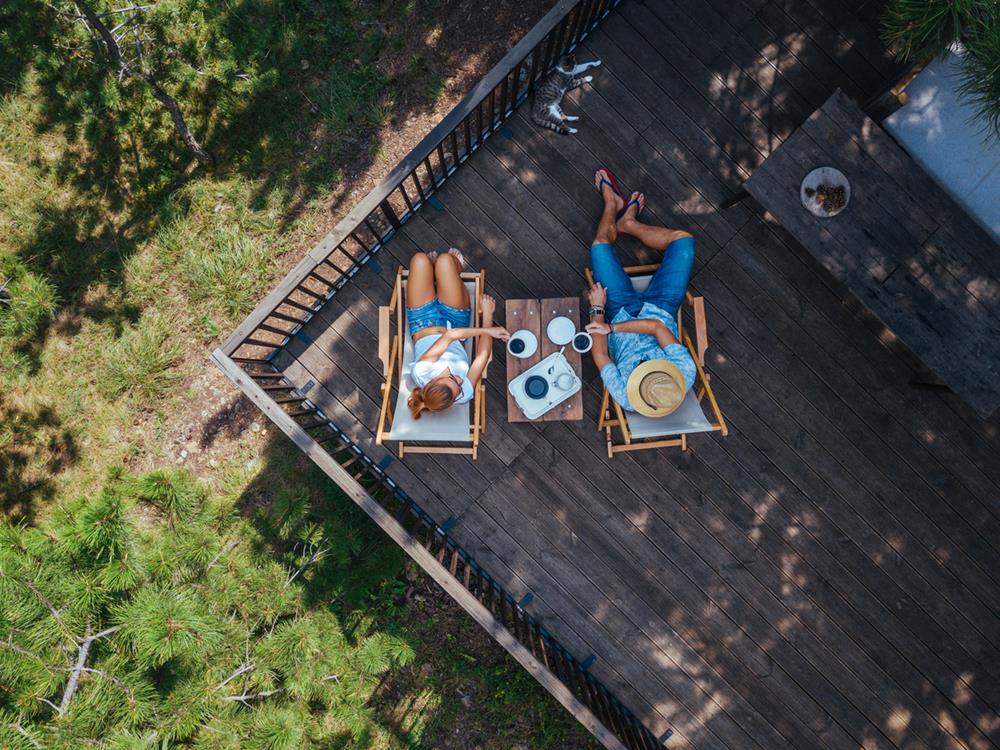
Shade is the single most effective way to cool a patio. Blocking direct sunlight lowers surface temperatures immediately and makes fans, misters, and furniture choices far more effective.
There are several shade options that work well in Texas:
- Covered patios or solid roofs for full, consistent protection
- Pergolas, especially when paired with fabric panels, slats, or retractable covers
- Retractable awnings and roll-down shades for flexible coverage
- Shade sails, which work well for large or irregular spaces
- Natural shade from trees, tall shrubs, or climbing vines
Layered shade works best. Overhead coverage combined with vertical screening keeps sun from creeping in as it moves across the sky during the day. If you are planning a larger upgrade or starting from scratch, read our guide on outdoor and exterior services for Texas homes to see how smart design choices can help beat the heat while also improving curb appeal.
Letting Heat Escape Through Airflow
Shade alone is not enough if hot air has nowhere to go. Good airflow keeps the space from feeling heavy and stagnant.
Open designs allow breezes to pass through naturally. Fully enclosing a patio without climate control often traps heat instead of blocking it. If privacy is needed, slatted panels, lattice, or outdoor curtains work better than solid walls.
Outdoor-rated ceiling fans are one of the most effective cooling tools available. Even slow-moving air makes a noticeable difference by helping sweat evaporate and preventing heat from settling.
Portable fans can also help, especially around seating areas. The goal is steady airflow across the patio rather than blasting air directly at people.
Using Water to Take the Edge Off the Heat
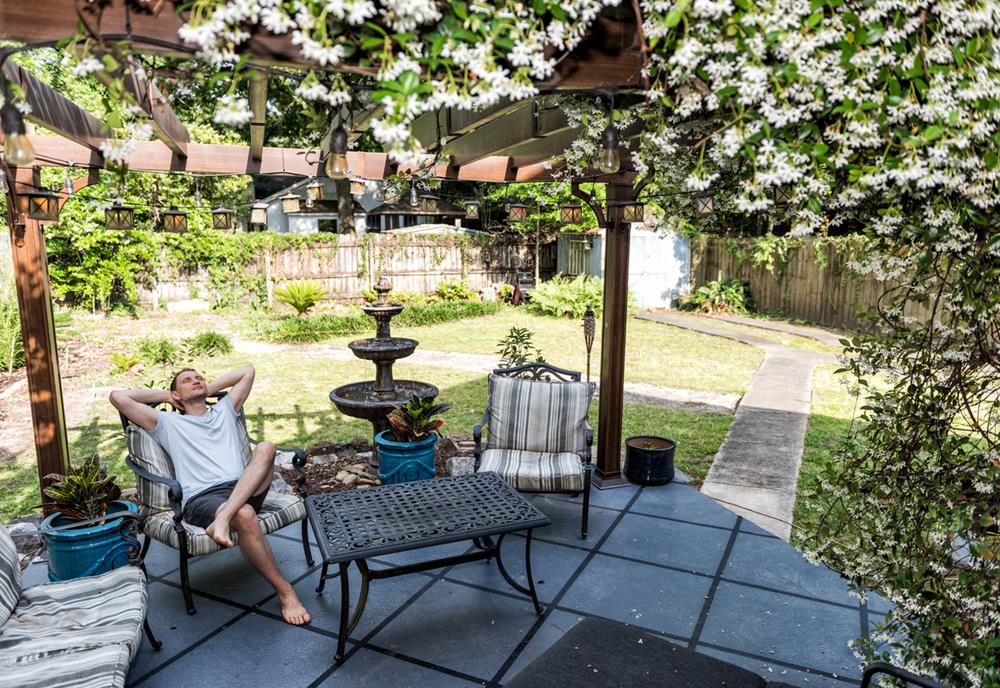
Water can help cool a patio when used carefully. The cooling effect comes from evaporation, which lowers the surrounding air temperature and softens the overall feel of the space.
Small fountains or wall-mounted water features provide subtle relief and create a calmer atmosphere. They will not dramatically change the temperature, but they make the patio feel less harsh.
Misting systems are more direct. They release a fine spray that cools the air quickly and work best during dry heat. Placement matters. Misters should be mounted overhead and angled to cool the air without soaking furniture or flooring. When used properly, they can make hot afternoons much more tolerable.
Furniture That Stays Comfortable in Summer
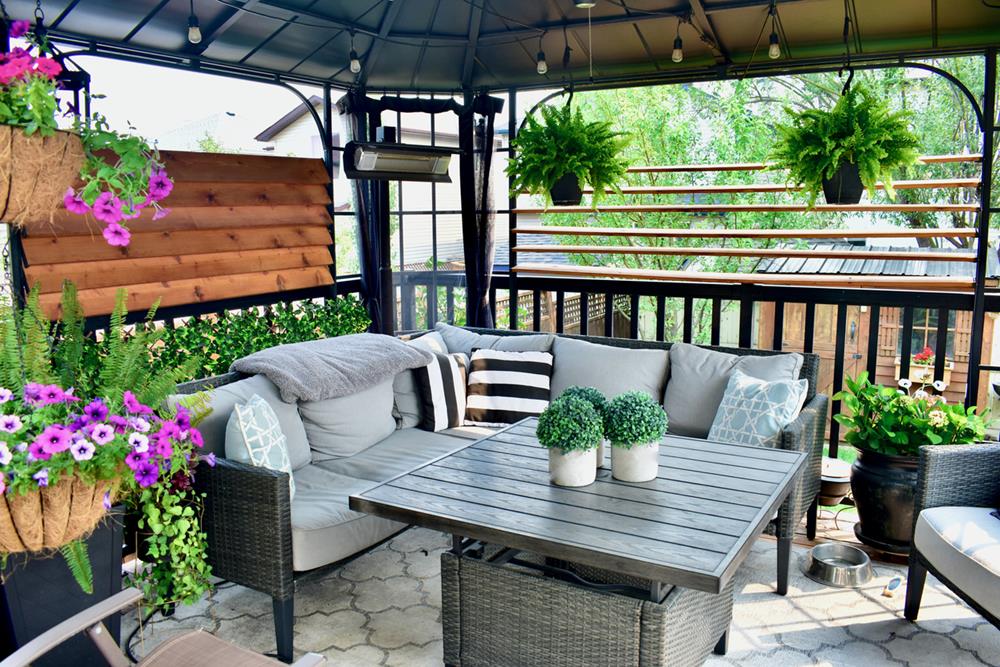
Furniture choice can either improve comfort or make heat worse. Some materials become uncomfortable to touch after sitting in the sun.
Metal furniture, especially in dark finishes, heats up quickly. If metal frames are used, pairing them with thick cushions and lighter coatings helps reduce discomfort.
Wood and wicker tend to stay cooler and feel more forgiving in high temperatures. Teak is a popular option because it handles sun, heat, and moisture well without becoming unpleasant to sit on.
Cushions matter just as much as frames. Outdoor fabrics with breathable weaves allow heat to escape. Light-colored fabrics stay cooler and fade less over time. Quick-drying foam prevents heat buildup after rain or misting.
Furniture placement also affects comfort. Leaving space between seating pieces allows air to move freely instead of trapping heat.
Flooring, Rugs, and Barefoot Comfort
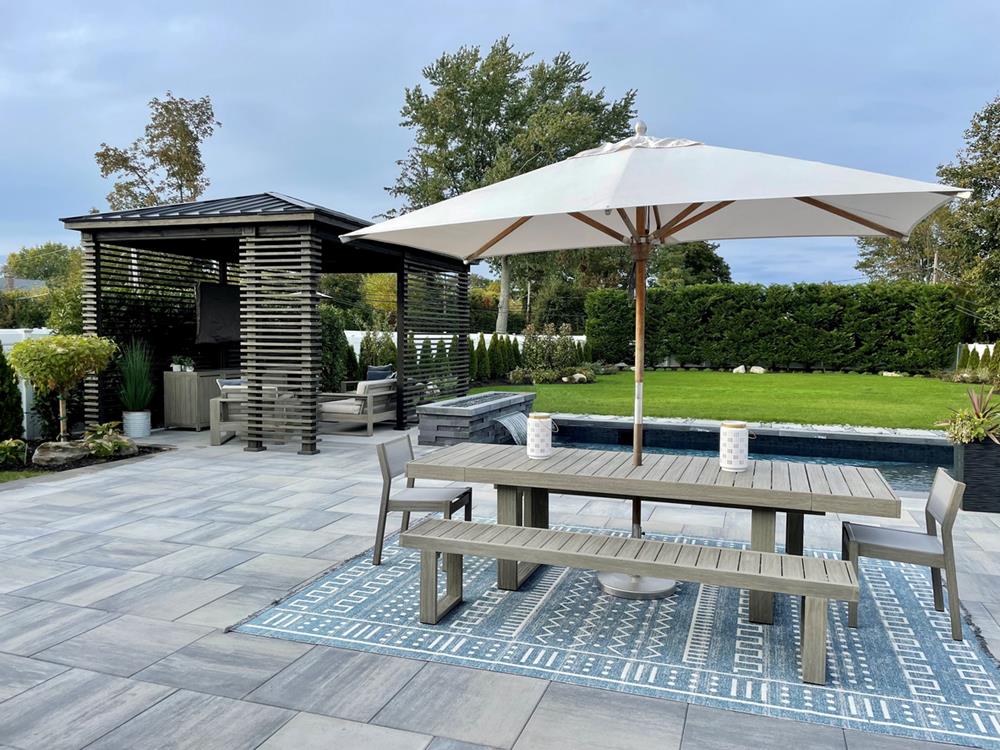
Hard surfaces radiate heat upward, especially in the afternoon. Outdoor rugs help break that heat transfer and make the space easier on bare feet.
Rugs made from polypropylene or recycled plastic fibers work well in Texas conditions. They resist fading, dry quickly, and do not trap moisture. Lighter patterns reflect sunlight and reduce glare while helping define seating areas visually.
Cooling With Plants Instead of Fighting Them
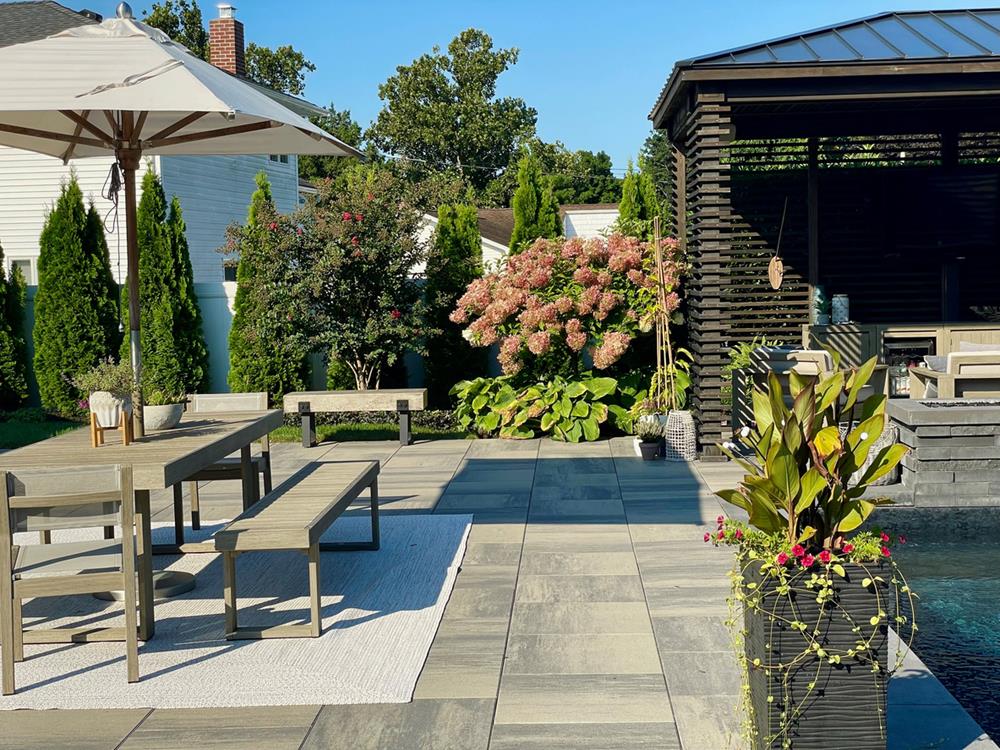
Plants actively cool the air and reduce reflected heat, making them one of the most effective natural cooling tools available.
Large potted plants placed around the patio perimeter help block sunlight and create cooler pockets of air. Tall planters can double as partial privacy screens.
Vines trained along pergolas or trellises create living shade that improves over time. Unlike solid structures, plant-based shade cools the air rather than trapping heat.
Native and drought-tolerant plants handle Texas heat better and require less maintenance, which makes them a practical choice as well.
Lighting That Does Not Add Warmth
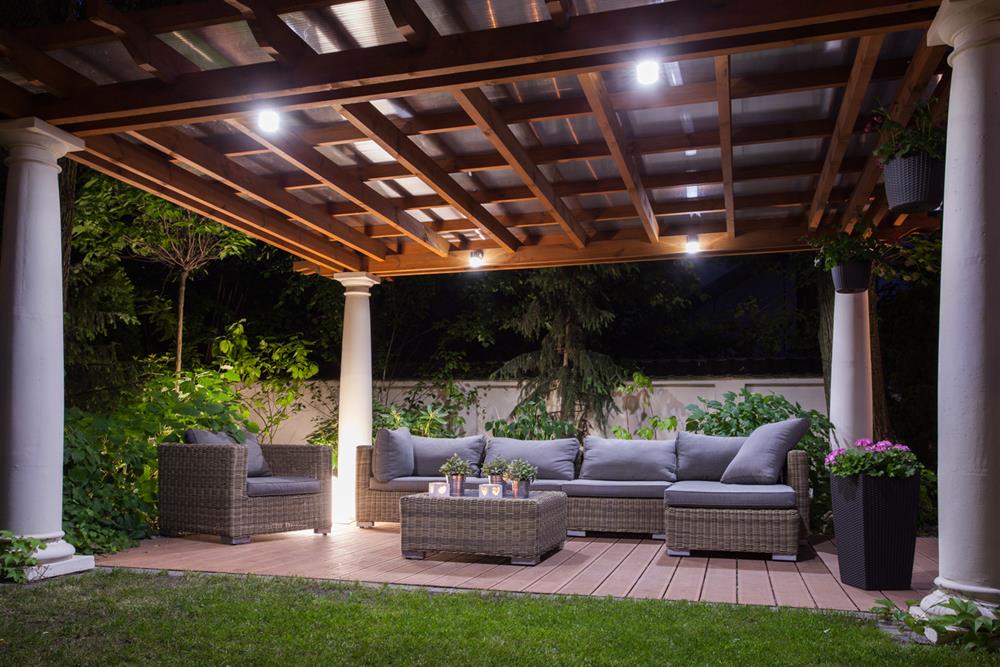
Lighting may seem minor, but traditional bulbs can add unwanted heat. LED outdoor lighting stays cool and uses less energy. Solar-powered lights work well for pathways and accent areas and produce no heat output at night.
Soft, indirect lighting makes the patio inviting during evening hours, which is often when outdoor spaces are most comfortable in summer.
Designing for More Than One Season
A well-designed Texas patio should work year-round. Flexibility helps the space adapt to changing weather.
Adjustable shade systems allow more sun during cooler months. Outdoor curtains can block winter winds and be pulled back during summer. Portable heaters extend usability into cooler evenings without permanently enclosing the space.
Thinking beyond summer increases the value and enjoyment of the patio.
Maintenance Keeps the Patio Cooler Over Time
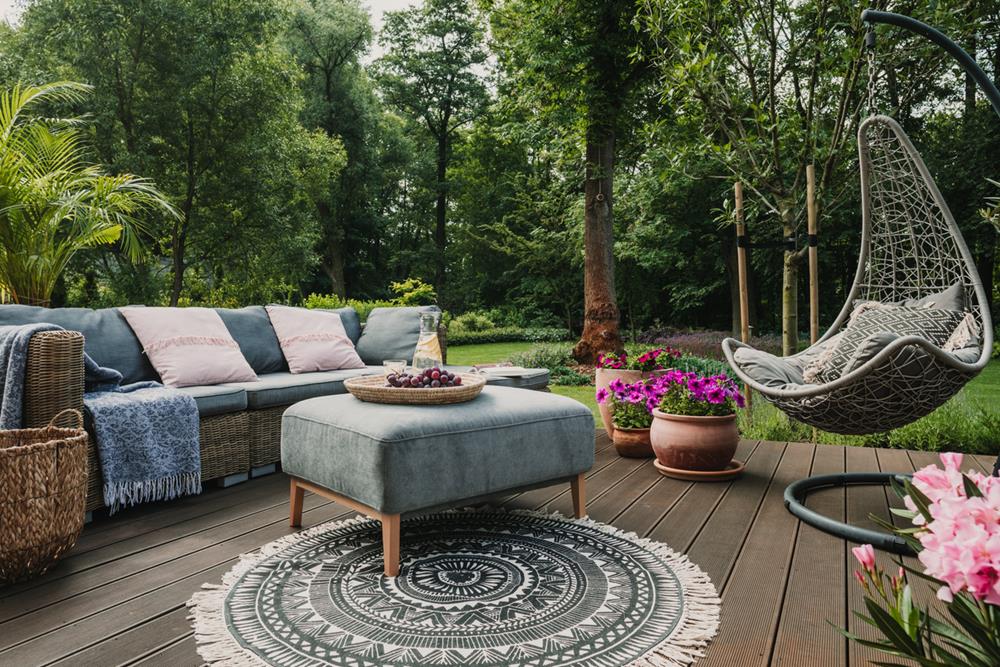
Maintenance affects temperature more than many homeowners realize. Dirty surfaces absorb more heat than clean ones. Regular washing helps materials reflect sunlight properly.
Shade fabrics fade and stretch over time, reducing their effectiveness. Replacing worn fabric restores cooling performance. Fans and misting systems should be cleaned and checked regularly to ensure proper airflow.
A well-maintained patio stays cooler, looks better, and lasts longer.
Making the Texas Sun Work for You
Building a patio that stays cool in the Texas sun comes down to stacking smart choices. Shade reduces direct heat. Materials limit absorption. Airflow keeps the space breathable. Small details fine-tune comfort.
The goal is not to escape the Texas climate, but to design a space that respects it. With thoughtful planning, a patio can remain comfortable through long summer days and become a place you actually want to use, even when the temperature climbs.

Comments (0)
No comments yet. Be the first to share your thoughts.
Leave a comment