



Image: Festival della Scienza from Genova, Bruce Sterling 2, CC BY-SA 2.0
Bruce Sterling’s transformative impact on the cyberpunk genre stems from his involvement in Austin’s creative and literary circles. Born in Texas, Sterling’s flair as a sci-fi writer blossomed with works like Islands in the Net and collaborations such as The Difference Engine with William Gibson.
His thought-provoking take on technology fuses with cultural insights, shaping future discourse through design fiction and speculative analysis. If you continue, you’ll uncover more of how Sterling’s unique vision crafted cyberpunk’s evolution.
Biography and Early Life
Bruce Sterling, born Michael Bruce Sterling on April 14, 1954, in Brownsville, Texas, had a unique upbringing that shaped his future as a writer.
Spending time in India during his youth broadened his perspective, setting the stage for a career in speculative fiction. He graduated with a journalism degree from the University of Texas at Austin in 1976, providing a solid foundation for his path as a science fiction writer.
In 1977, he published Involution Ocean, marking the beginning of his professional writing career.
By the 1980s, Sterling became a recognizable figure in Austin, organizing technology-themed Christmas parties that showcased experimental digital art. These gatherings helped foster a community of writers, artists, and technologists.
His fanzine, Cheap Truth, connected him with fellow genre pioneers, helping crystallize radical new ideas in speculative fiction.
Contributions to Cyberpunk and Literature
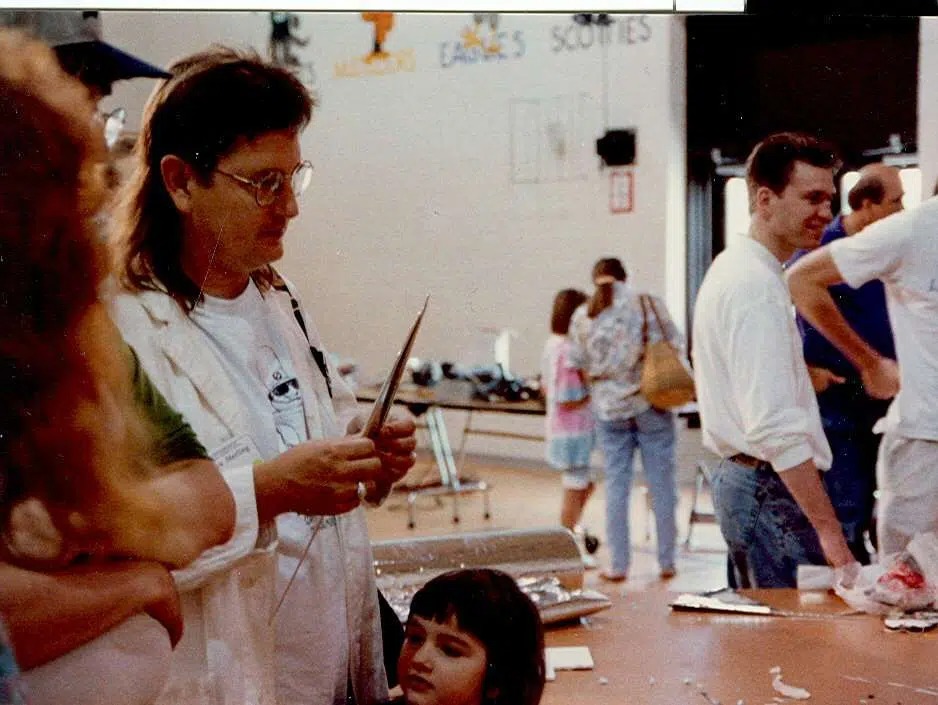
Image: Jon Lebkowsky, Bruce Sterling at Robofest, CC BY-SA 2.0
Few writers have shaped the landscape of cyberpunk and speculative fiction as profoundly as Bruce Sterling.
Works like Islands in the Net and The Hacker Crackdown delve into the intersections of technology, civil liberties, and surveillance culture. His collaboration with William Gibson on The Difference Engine helped establish the steampunk subgenre, blending 19th-century settings with proto-digital technology.
Sterling’s Islands in the Net earned him the John W. Campbell Memorial Award, and his short fiction earned Hugo Awards for Bicycle Repairman and Taklamakan.
Beyond fiction, his Viridian Design Movement emphasized eco-centric design, global citizenship, and sustainable futures.
His cyberpunk work helped inspire future generations of writers, technologists, and futurists to explore society’s digital transformation through speculative narratives.
Academic Involvement and Theoretical Works
While Bruce Sterling’s fiction is foundational, his academic and theoretical contributions have also greatly influenced modern thought on technology and design.
Since 2003, he has taught at the European Graduate School, enriching students’ understanding of media theory and future studies. He has also held roles at institutions like the Art Center College of Design in Pasadena, focusing on design and speculative futures.
Projects like the Dead Media Project catalog obsolete technologies, while the Viridian Design Movement encourages environmentally conscious design thinking.
His theoretical books, such as Shaping Things and Tomorrow Now, analyze design, obsolescence, and technological transformation.
Sterling’s teaching and theory continue to shape how creatives approach the intersection of technology and society.
Blogging, Articles, and Publications
Exploring Bruce Sterling’s presence in journalism and commentary reveals his impact beyond novels.
His Wired Magazine blog, Beyond the Beyond (2003–2020), was one of the longest-running and most influential in tech journalism. Through this platform, Sterling offered sharp insights into innovation, culture, and speculative design.
Articles like “Design Fiction” and “SoCal DigiCult” blended architectural and cultural analysis with futurist thinking.
Sterling’s essays for Wired, including “Dispatches from the Hyperlocal Future,” examined how technology reshapes society at granular levels.
As editor of Mirrorshades: The Cyberpunk Anthology, Sterling helped define and promote the voices that shaped the cyberpunk movement.
Future Concepts and Societal Commentary
Bruce Sterling’s speculative works invite readers to reflect on emerging technologies and their consequences.
In Tomorrow Now: Envisioning the Next Fifty Years, he outlines six human virtues through which society may evolve alongside tech, including courage, discipline, and endurance.
His piece “Petrol Society: As it All Melts Away” critiques global fossil fuel dependency and its societal impacts.
In “Junk: Learning to Love Obsolescence,” he reframes discarded technology as cultural artifacts, encouraging a rethinking of consumerism.
By popularizing “design fiction,” Sterling challenges us to imagine hypothetical futures using artifacts and narratives.
His essays like “Dispatches from the Hyperlocal Future” illustrate how local-scale change may be the most meaningful lens for analyzing tech’s impact.
Emergence of New SF Writers
- Connection: Sterling played a critical role in uniting radical voices in science fiction.
- Innovation: His editorial work helped usher in cyberpunk and post-cyberpunk movements.
- Community: Fanzines, conventions, and collaborations gave shape to a new subculture of speculative thinkers.
The Cyberpunk Gathering and Panel Experience
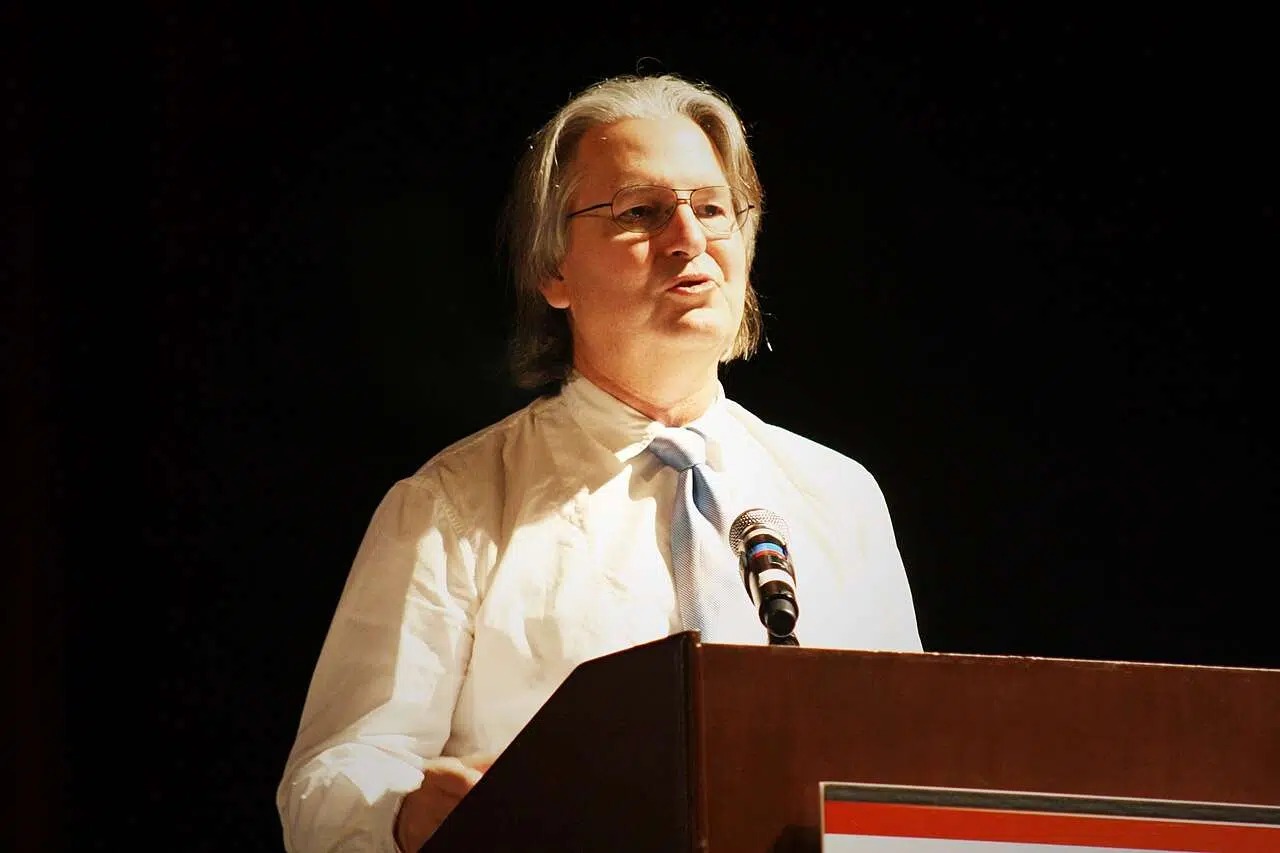
One pivotal moment in cyberpunk’s rise occurred at the 1983 Worldcon in Baltimore.
There, Sterling, Gibson, and John Shirley participated in a tense panel about cyberpunk’s relevance. A moderator’s dismissiveness toward the movement led Shirley and others to walk out, frustrated with the lack of understanding from traditional sci-fi circles.
Sterling remained, defending the movement and its authors as legitimate voices for a rapidly changing era.
The encounter mirrored earlier literary revolutions like the Beat Generation, solidifying cyberpunk’s identity as a genre born of tension, rebellion, and vision.
Reflections and Influence of Cyberpunk Literature
Sterling’s impact resonates emotionally and intellectually:
- Innovation: His narratives continue to inspire inventors, designers, and storytellers.
- Awareness: His essays warn of tech’s unintended consequences and ethical blind spots.
- Legacy: As one of cyberpunk’s architects, Sterling’s work remains a cornerstone of speculative thought and digital-age reflection.

Comments (0)
No comments yet. Be the first to share your thoughts.
Leave a comment