


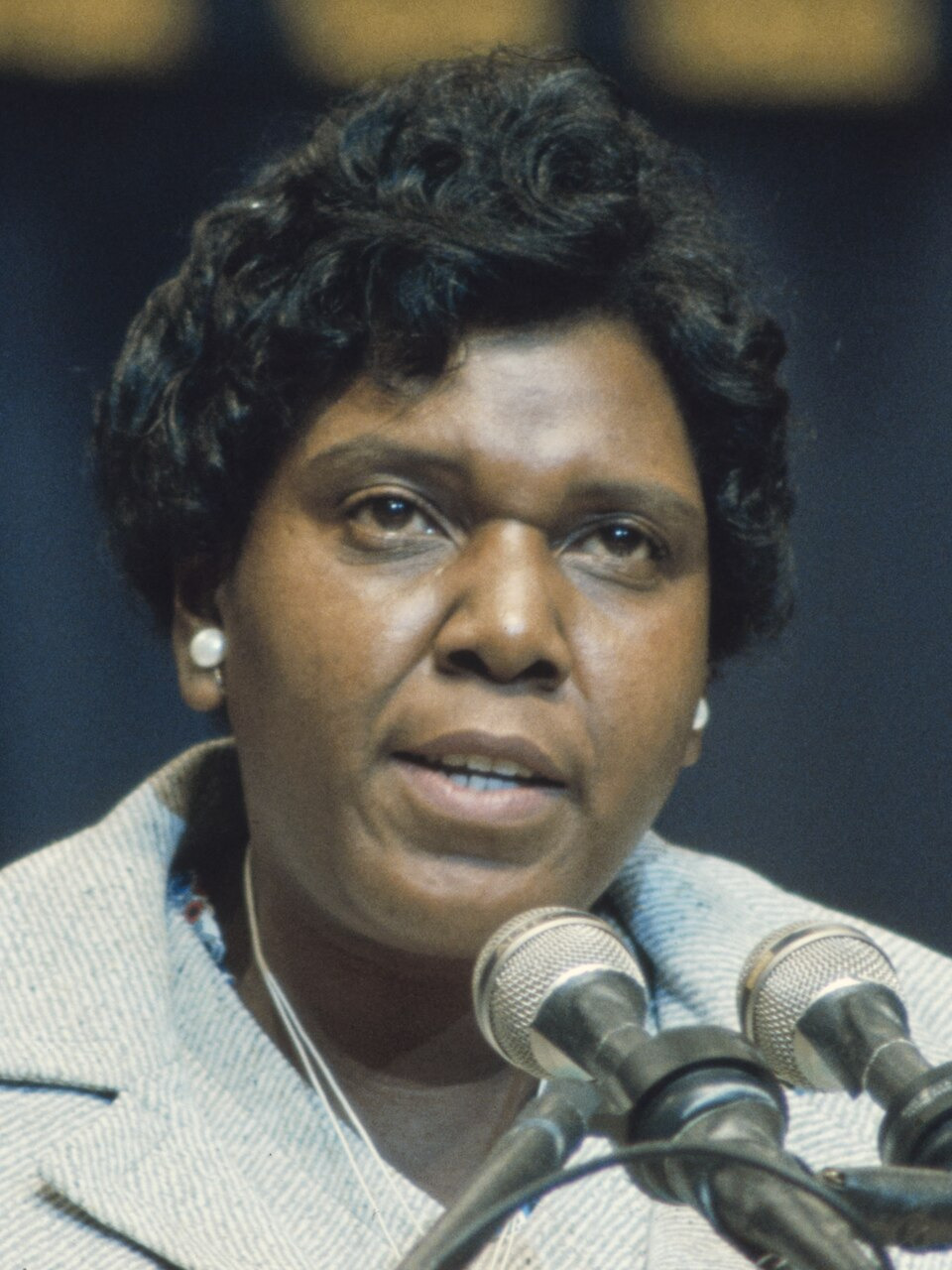
Barbara Jordan made history as Texas’s trailblazing congresswoman, breaking barriers as the first African American woman elected to the Texas Senate and the first African American from the South elected to the U.S. House of Representatives.
Her eloquence during the Watergate hearings and push for civil rights legislation left an indelible mark. Post-retirement, she continued influencing public policy as a professor and public speaker. Curious to uncover how she further impacted social justice and left a lasting legacy?
Early Life and Education
Although Barbara Jordan’s journey began in a segregated Houston, Texas, environment, she quickly rose above the limitations set by society.
Born in 1936, Jordan was inspired by her father’s sermons and her mother’s dedication as a church teacher. Her path in education started at Phyllis Wheatley High School, where she graduated in 1952.
She then attended Texas Southern University, excelling as a member of the debate team, before earning her bachelor’s degree in 1956. Determined to pursue law and advocate for civil rights, Jordan enrolled at Boston University School of Law, obtaining her law degree in 1959.
This strong educational foundation prepared her for a future of advocacy and leadership, becoming an inspiring figure in the fight for equality and justice.
Breaking Barriers in the Texas Senate
Building on her strong educational foundation and deep commitment to civil rights, Barbara Jordan made history in 1966 when she was elected to the Texas Senate.
As the first African American woman in this role, Jordan was a pioneering lawmaker. She championed the first minimum wage law in Texas and pushed for anti-discrimination clauses in business contracts, advocating tirelessly for farmworkers and civil rights.
Her leadership was further recognized when she was elected president pro tempore, a testament to her influence in a male-dominated legislature.
On June 10, 1972, Jordan broke another barrier by serving as acting governor of Texas for a day, becoming the first Black woman in U.S. history to preside over a state—even symbolically—solidifying her political career.
Making Waves in Congress
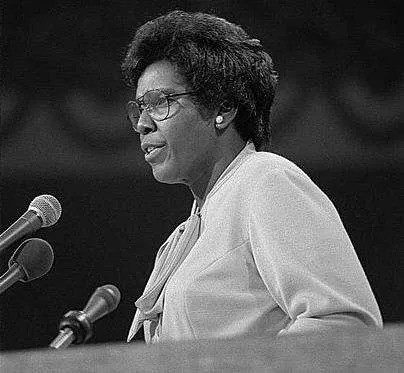
Upon her election to the U.S. House of Representatives in 1972, Barbara Jordan became the first African American woman from the South to serve in Congress.
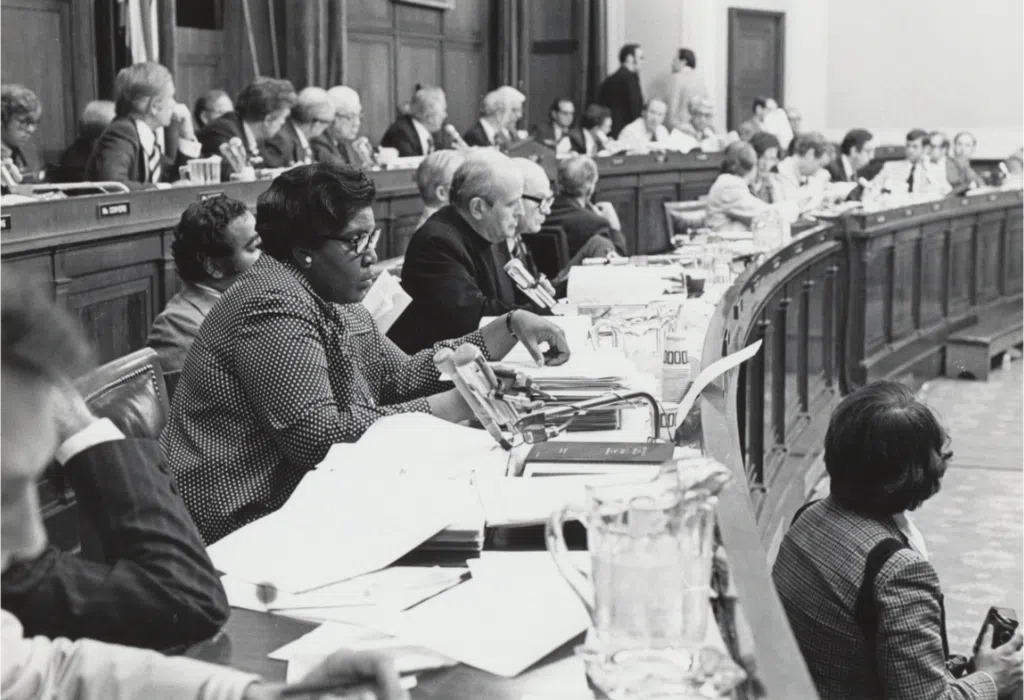
As a trailblazing lawmaker, she quickly made waves, particularly on the House Judiciary Committee. Her powerful speaking style gained national attention during the Nixon impeachment hearings, where her emphasis on the Constitution’s importance resonated deeply.
Jordan wasn’t just a voice; she took action by sponsoring legislation to expand the Voting Rights Act, ensuring protections for Latino, Native American, and Asian American voters. Her advocacy extended to civil rights, minimum wage laws, and anti-discrimination efforts.
In 1976, she broke barriers again by delivering a keynote address at the Democratic National Convention.
The Watergate Legacy
During the tumultuous period of the Watergate scandal, Barbara Jordan emerged as a vital figure, capturing national attention with her historic opening statement at the 1974 hearings. As a member of the House Judiciary Committee, she played a significant role in the impeachment proceedings against President Nixon.
Jordan’s powerful remarks emphasized the U.S. Constitution’s importance and the need for accountability, showcasing her deep commitment to constitutional integrity.
Her speeches weren’t only a display of rhetorical skill but also underscored her role as a moral voice for justice. In this pivotal moment of American political history, her clarity and conviction stood out, solidifying her legacy as a trailblazer.
A Voice at the Democratic National Convention
Although the political landscape of the 1970s was fraught with division, Barbara Jordan stepped onto the national stage at the 1976 Democratic National Convention with a groundbreaking keynote address.
As the first Black woman to hold this honor, her speech was a historic moment that underscored the importance of civil rights and unity.
With her powerful speaking style, Jordan captivated the nation, emphasizing social justice and the constitutional principles of equality and fairness.
Her address was more than just a speech; it was a call for inclusive representation and a vision for a united America.
Retirement and Continued Impact
When Barbara Jordan retired from Congress in 1979, she didn’t fade into obscurity; instead, she became a guiding light of wisdom and influence as a professor at the Lyndon B. Johnson School of Public Affairs at the University of Texas at Austin.
Her retirement didn’t slow her down. Jordan continued to shape the minds of future leaders while advocating for civil rights and public ethics. She received 25 honorary doctorates, affirming her national influence.
As a public speaker, she addressed pressing issues, including opposing Robert Bork’s Supreme Court nomination. Despite multiple sclerosis, she led the U.S. Commission on Immigration Reform in 1994 and gave a powerful keynote at the 1992 Democratic National Convention, proving that retirement was just another chapter in her life of service.
Honoring a Legacy: Buildings and Statues
Barbara Jordan’s legacy is celebrated through powerful symbols like buildings and statues that honor her contributions to civil rights and public service.
The Barbara Jordan Building, a striking structure in the Texas Capitol Complex, stands as a tribute to her role as a trailblazing lawmaker and the first Black Texan honored with a namesake building in the complex.
Her impact is further commemorated by a bronze statue at the University of Texas at Austin, the first statue of a woman on campus, commissioned after a student-led initiative.

mcdlttx, Barbara Jordan Gravestone, CC BY 2.0
Though initially discussed as a seated figure reflecting her disability, the final sculpture depicts her standing, reflecting her dignified and commanding public presence.
These memorials, along with honors like the Presidential Medal of Freedom in 1994, underscore her enduring impact on justice, leadership, and equality.

Comments (0)
No comments yet. Be the first to share your thoughts.
Leave a comment