


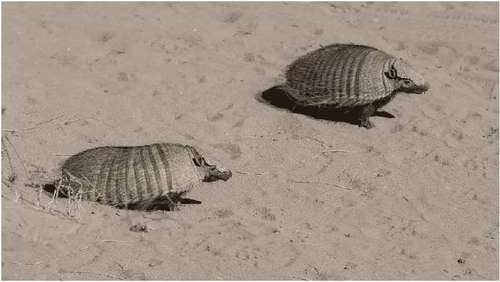
There’s nothing quite like walking into a Texas small-town fair, hearing the squeal of children, the scent of funnel cake in the air, and then—just when you think you’ve experienced it all—seeing a countdown, a clap of hands and an armadillo launching itself across the track.
Welcome to armadillo racing, a delightfully quirky tradition found at county fairs and festivals across Texas, where one of the state’s most iconic creatures takes center stage in a race that’s more fun than fierce.
From a spectator’s vantage point you’ll see painted numbers on little dillos, a short dash across a marked lane, a cage at the finish and cheers from the crowd. It might look absurd—and that’s part of the charm—but the event is deeply rooted in community celebration, regional culture and a light-hearted embrace of Texas wildlife.
How It Started
Armadillos, with their leathery armour, rolled-up posture and surprisingly quick shuffle, have long been common across Texas. The nine-banded armadillo is the official state small mammal, and its presence in fields, roadsides and backyard fences is part of the Lone Star fabric.
According to folklorists, the idea of racing armadillos dates back to rural gatherings in the mid-20th century, when fairs sought a novelty event that would draw families and laughter without the expense or risk of full-blown animal spectacle.
One early account suggests a South Texas county fair in the 1960s held a “wildlife dash” as a novelty attraction; by the 1970s the armadillo race had developed its own rules, equipment and local fans. Over decades the activity spread, with variations appearing at dozens of fairs across Texas—including armadillo derbies, handicap races and charity timed-events.
Today, it is not only part of entertainment but part of community identity. Some fairs advertise the event years in advance. Some local clubs breed or source armadillos, paint them race numbers, and build makeshift tracks with fences and lanes. For residents, the race is part nostalgia, part spectacle, part reminder of how wildlife and regional culture can converge.
What the Race Looks Like
At most fairs, the setup is simple: a short straight track—often marked with chalk or sand—flanked by low rails. At the finish sits a small cage or box with the number corresponding to each entrant. The announcer might call each armadillo by name: “Number 7 Dirt-Dillo is off!” Muffled cheers, a quick scramble of legs, and the little creature disappears into the tunnel.
Rules vary: some races are timed, others are elimination. Some allow the racer to pick up the armadillo and place it on the start line; others prefer it released from a barrel. In certain festivals, handicaps apply—some armadillos get a “head start” to equalize the competition. And yes, you’ll often hear playful commentary: “And they’re off… oh, look at Number 12 roll out!”
The crowd is part of the show: kiddos waving foam fingers, adults betting on fun (often free or symbolic wagers), fair food vendors nearby and DJ or live music backing the vibe. The race might last only 10 seconds but the memory lasts far longer.
Where to See Armadillo Racing & When
If you’re planning a fair-day excursion looking for armadillo racing, it pays to know which fairs host it and when. Because each event is locally run, the date, rules and entrance vary—but here are some patterns:
- Timing: Most races happen in spring or early summer when fairgrounds are open and weather is suitable.
- Location: Typically at county or regional fairs in East, Central, and South Texas. Some appear at agricultural festivals; others at multi-day events with livestock shows.
- What to check: Look at fair schedules, ask about “armadillo derbies” or “dillo races”, and arrive early—some races sell out or limit spectators.
One notable fair draws thousands each year for the event and turns the little track into a key draw for families. Because the races tend to run late morning or mid-afternoon, they’re easily paired with rides, livestock barns, live music and more fair-ground fun.
Why It’s More Than Just a Race
Beyond the novelty, armadillo racing reveals layers of Texas culture and community value:
- Wildlife familiarity
- Armadillos roam much of Texas, but rarely get stage time. The race gives them attention—quirky though it may be—and invites people to notice a small creature that shares the landscape. Some fairs incorporate educational booths about armadillo biology, habitat and safe human-wildlife encounters.
- Community gathering
- The races are run by local volunteers, fair associations, 4-H clubs and civic groups. They bring together generations—from grandpas remembering old races to kids placing their bets and cheering the dillos home. That sense of shared memory adds meaning to the spectacle.
- Nostalgia & place-making
- Many small towns see growth, urbanisation and change—and the armadillo race becomes a cultural anchor. It reminds residents of simpler times, local wildlife, fairs where everyone knew each other, and events that connected neighbourhoods and families.
- Economy of fun
- With modest cost, high return on fun, the race fits perfectly in the fair ecosystem. Little infrastructure, big smile potential. For fair organisers, it’s a cost-effective headliner. For visitors, it’s a story you’ll tell.
Visiting Tips and Etiquette
If you decide to attend an armadillo race at a Texas fair, here are some tips to enhance your experience and respect the event:
- Arrive early: Secure a good viewing spot; these races draw families.
- Bring modest binoculars if you’re farther back—some tracks are short and the action is quick.
- Be fair to the animals: Follow posted rules. Don’t attempt to chase, grab or distract the armadillos. Race rules exist to protect them.
- Support the fair: Grab a snack, buy a race T-shirt, contribute to the local fund that often benefits through the race.
- Pair the experience: Use the race as part of the fair day—visit other barns, ride attractions, hit the livestock shows.
- Keep it fun: Remember, the goal is community, laughter, memory—not “serious competition.”
Why Armadillo Racing Is Worth a Stop
If you’re exploring Texas and want a stop that’s off-beat, memorable and deeply local, this is it. You’ll get something you don’t see in big city festivals—a race around a track that’s designed for something truly Texan.
Kids will laugh, adults will smile, and the armadillo (for once) will get its day. Plus, you’ll walk away with a photo, a silly story and a deeper appreciation for how small-town fairs keep culture alive in Texas.
Whether you’re coming for the rides, the livestock, the live music and food—or just searching for unique experiences—carving out time for an armadillo race adds character to your journey. It’s Texas tradition, with a twist.
Comments (0)
No comments yet. Be the first to share your thoughts.
Leave a comment