


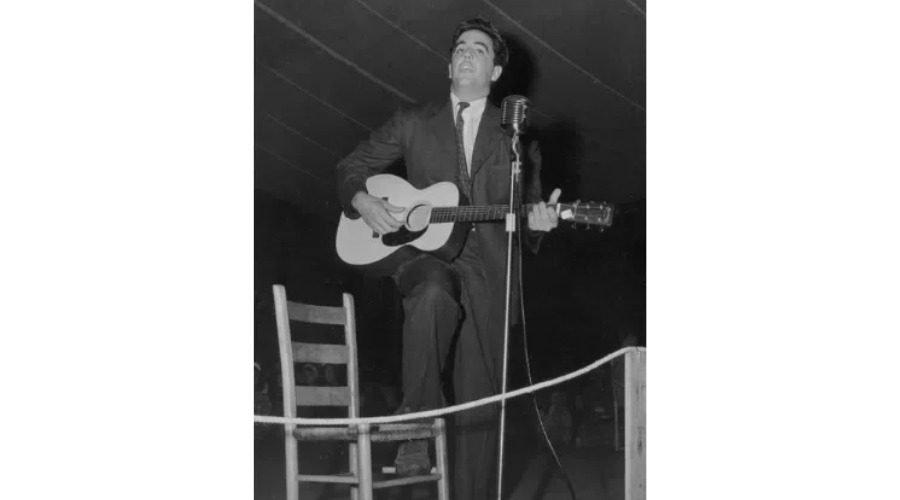
Uncover how Alan Lomax, Austin’s own, dedicated his life to preserving the soul of folk music. Growing up in a musical household, he recorded over 10,000 songs, captured marginalized voices, and introduced icons like Lead Belly. His radio broadcasts brought traditional sounds worldwide.
Through efforts like the Columbia World Library of Folk and Primitive Music, Lomax championed cultural preservation. To understand the profound impact of his work, you’ll find enlightening stories ahead.
Early Life and Influences

Born in Austin, Texas, on January 31, 1915, Alan Lomax grew up surrounded by a world of folk music, thanks to his father, John Lomax, a renowned folklorist. You can imagine young Alan absorbing the rich cultural heritage passed down through generations.
After briefly attending Harvard, he graduated Phi Beta Kappa from the University of Texas in 1936. Starting in 1933, he joined his father on field trips for the Library of Congress, capturing the voices of sharecroppers and prisoners during the Great Depression.
His commitment to preserving folk music was evident when he co-published American Ballads and Folk Songs in 1934. Through his radio show, he introduced artists like Lead Belly and Woody Guthrie, connecting their music to broader audiences.
Recording America’s Folk Heritage
As the Great Depression gripped America, Alan Lomax embarked on a mission to capture the essence of the nation’s folk music, ensuring these authentic voices weren’t lost to time.
By recording field songs from sharecroppers and prisoners, Lomax preserved crucial parts of American history. His work transcended mere documentation, contributing greatly to ethnomusicology.
Here’s how:
- Field Recordings: Lomax recorded over 10,000 songs, now archived at the Library of Congress.
- African American Musical Traditions: Co-authored books like Negro Folk Songs as Sung by Leadbelly to highlight these traditions.
- Cantometrics: Developed this methodology to analyze music’s role in social behavior.
- Oral Histories: Captured cultural narratives, ensuring marginalized voices were recognized in American heritage.
Your understanding of America’s rich folk legacy is improved by Lomax’s careful work.
Collaborations With Legendary Artists
Alan Lomax didn’t just record America’s folk heritage; he also played an essential role in bringing legendary artists to the forefront. As an ethnomusicologist, he collaborated with folk music legends like Lead Belly, whose recordings at Louisiana State Penitentiary (Angola) catapulted him into the American music spotlight.
Co-authoring Negro Folk Songs as Sung by Leadbelly with his father, Lomax further cemented Lead Belly’s legacy. His interviews with icons like Woody Guthrie and Jelly Roll Morton guaranteed their stories and sounds endured.
With Shirley Collins, he recorded material for Sounds of the South, showcasing the cultural richness of Southern traditions. Lomax’s collaborations introduced diverse musical genres to new audiences, enriching the American music tapestry and preserving its lively history for future generations.
Innovative Broadcasts and Cultural Contributions
Though widely known for his field recordings, Alan Lomax’s groundbreaking broadcasts and cultural contributions set him apart as a visionary in the world of music. As an ethnomusicologist, he utilized radio to bring American folk music to the masses.
Here’s how he left a lasting impact:
- National Radio Show: In the late 1930s, Lomax’s show reached 10 million students, introducing them to the rich heritage of American folk artists like Lead Belly and Woody Guthrie.
- Diverse Genres: His 1940s eclectic radio program showcased artists like Django Reinhardt and Hank Williams, highlighting cultural diversity.
- Global Promotion: Lomax’s work on the Columbia World Library of Folk and Primitive Music spread traditional recordings globally.
- Voyager Golden Record: As a consultant, he helped ensure music from Blind Willie Johnson and Louis Armstrong was included, preserving cultural heritage.
Challenges and Resilience in a Changing America
During the tumultuous period of the Great Depression, Alan Lomax faced significant challenges that tested his dedication to preserving American folk music. Despite financial instability and societal upheaval, Lomax persisted in documenting the rich tapestry of American heritage.
His resilience was evident during World War II, as he produced radio programs that enhanced troop morale, highlighting the unifying power of folk music in crises.
Lomax encountered racism and cultural erasure in the South, recording music from marginalized communities and advocating for cultural equity. His work emphasized the importance of preserving diverse voices.
Later, by founding the Association for Cultural Equity, Lomax ensured that folk music continued to flourish despite changing societal dynamics, safeguarding the cultural contributions of marginalized artists for future generations.
Global Impact on Ethnomusicology
Lomax’s commitment to preserving folk music wasn’t confined to American borders. As a pioneering ethnomusicologist, Alan Lomax’s global perspective transformed the understanding of cultural context and diverse musical traditions.
Through his extensive field research, Lomax recorded over 10,000 songs, enriching the preservation of folk music worldwide. His methodologies, including Cantometrics, linked music with social behavior, broadening the scope of ethnomusicology.
Consider these remarkable global impacts:
- Documented traditional music in countries like Haiti, Spain, and Italy, enhancing cultural equity.
- Influenced the Voyager Golden Record project, representing diverse musical cultures.
- Established the Association for Cultural Equity, digitizing over 17,000 recordings.
His work continues to inform the study of music’s role in cultural identity and preservation. Lomax’s legacy underscores music’s universal language.
Legacy and Preservation Efforts
When you explore the legacy of Alan Lomax, you see a profound dedication to preserving the cultural richness of folk music. He recorded over 10,000 songs from folk artists, ensuring the preservation of American music heritage. His efforts with field recordings and oral histories captured the social contexts of the music.
In 1983, he founded the Association for Cultural Equity, advocating for cultural equity by recognizing music from marginalized communities. Lomax’s work restored rights to original folk artists and emphasized preservation.
Thanks to his dedication, over 17,400 digital audio files are now accessible to the public, allowing ongoing engagement with diverse musical traditions. His legacy continues to inspire and promote cultural preservation through accessible digital archives.
Celebrating a Lifetime of Cultural Equity
Cultural equity stands as a testament to Alan Lomax‘s unwavering passion for championing diverse musical traditions. As an ethnomusicologist, Lomax dedicated his life to the preservation of folk music and cultural diversity.
His efforts were crucial in highlighting marginalized voices through his recordings and interviews with iconic American music figures like Lead Belly and Woody Guthrie.
Celebrating his achievements, Lomax’s work emphasized:
- Cultural Equity: Co-founding the Association for Cultural Equity in 1983.
- Preservation: Recording over 10,000 songs to safeguard folk music.
- Cantometrics: Developing methodologies to explore music’s link to social behavior.
- Global Music: Contributing to the Voyager Golden Record, showcasing global sounds.
His accolades, including the National Medal of Arts, underscore a lifelong commitment to cultural equity.

Comments (0)
No comments yet. Be the first to share your thoughts.
Leave a comment